Quick summary
- Light rail and trams run along the riverfront, so ride to the stop nearest the water and cover the last stretch on foot past the Rheinturm.
- From Düsseldorf Hauptbahnhof the harbour is a proper city walk through the shopping streets and the Altstadt, so allow time and wear comfortable shoes.
- Multi-storey car parks and marked bays serve the harbour district, and taxis or ride-share cars can set you down near the promenade before the final walk.
- The MedienHafen Tour runs 2 hours with a live guide in German and English, from US$218, rated 4.64 from 276 reviews.[1]
- Rhine cruises dock along the promenade close to the harbour, and the riverside path makes an easy approach on two wheels or on foot.
| On foot | Tram and U-Bahn | By car | |
|---|---|---|---|
| Great for | The Altstadt and promenade | Quick hops from the station | Families and luggage |
| Where you arrive | Rheinuferpromenade | Stops close to the water | Harbour car parks |
| Plan around | Comfortable shoes | A ticket for your zone | Signs and barriers |
| Watch out for | Long riverside distances | Busy trams at peak times | Event-day queues |
| Pairs well with | Rheinturm and Gehry buildings | Königsallee shopping | Day trips along the Rhine |
The prerequisite for the one and a half kilometers of quality of life was the construction of the Rhine bank tunnel.
Getting to the MedienHafen: the verdict
Before you travel
- Tram and U-Bahn: ride to the stop nearest the river, then walk the last stretch
- Tickets: keep yours with you for the whole journey
- Timing: give yourself extra time when the city is busy with events
- Cash and card: both are useful at kiosks, car parks and ticket machines
At the harbour
- Meeting point: confirm the exact spot before you leave your hotel
- Step-free routes: check lift access at your stop if you use a wheelchair
- Crowds: allow a little more time on warm evenings and event days
- Weather: the riverfront is exposed, so pack a light rain jacket
U-Bahn and Tram Access to MedienHafen
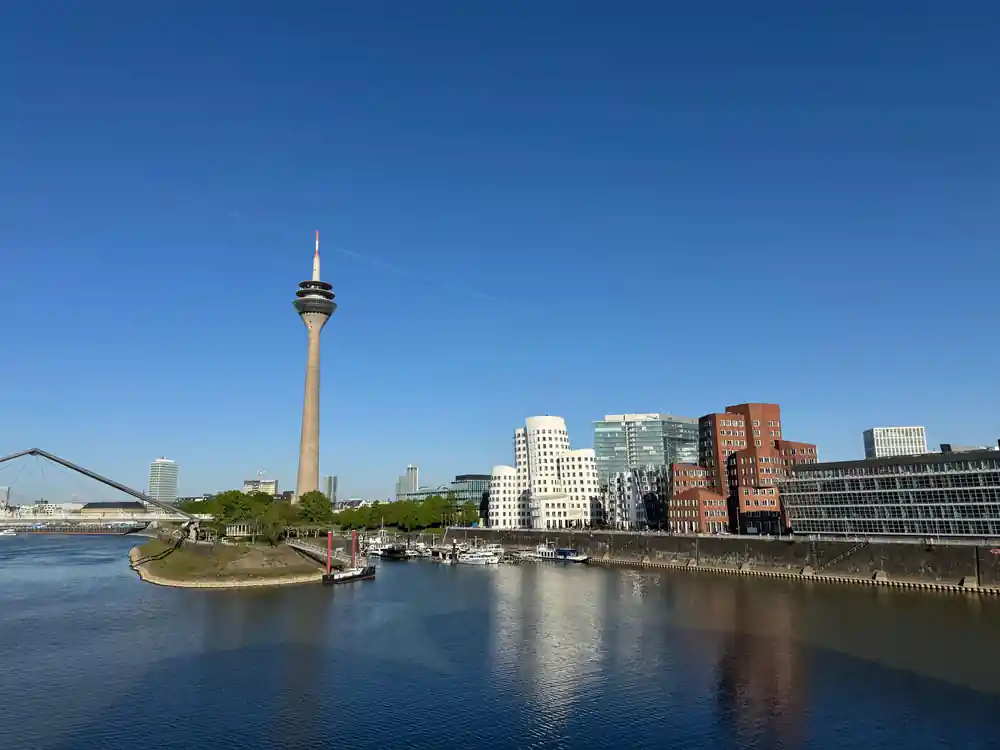
The MedienHafen sits on the river side of the city, south west of the Altstadt, on ground the old docks once used. Trams and the U-Bahn run along the edge of the centre and stop within a short walk of the water, so the usual approach is to ride to the last stop before the river and cover the final stretch on foot. Look up and you will see the Rheinturm, which is 240.5 metres tall and was built between 1979 and 1982.[2]
If you want the ride itself to be the outing, a guided tour of the art on the Wehrhahn line runs 1.5 hours with a German speaking guide and costs from US$23.[3] Otherwise plot the trip on Düsseldorf MedienHafen maps before you leave, keep your ticket with you, and step off where the streets open towards the water. The tower makes a reliable landmark, and its light clock, the Lichtzeitpegel, is an installation by Horst H. Baumann that uses a vertical series of lights to show the time.[4]
Düsseldorf recorded 3,068,803 guest arrivals in 2018, so the network can feel full at peak moments.[5] If you plan to ride public transport more than once, the DüsseldorfCard Plus, listed as covering free public transport and discounts, is valid 2 to 4 days and costs from US$34.[6]
Walking from Düsseldorf Hauptbahnhof
Walking in from the main station takes you through the shopping heart of the city, across Königsallee and down into the Altstadt, and then the streets open onto the river. It is not the prettiest start, but the reward is the moment the Rheinuferpromenade appears, one and a half kilometers of paved riverside with boats on one side and beer halls on the other.[7] A Dusseldorf map of the tram network is a useful backup if your legs give out on the way back.
If you would rather have the walk explained, the guided city architecture walking tour covers Königsallee, Kö-Bogen, Dreischeibenhaus and Ehrenhof, runs 2 hours with a live guide in German and costs from US$23.[8] There is an unhurried alternative too: the Altstadt guided tour runs 1.5 to 2 hours and costs from US$218, with a private group option available.[9]
A hop-on hop-off ticket covers much of the same ground without the walking. It costs from US$28, is valid for 1 day from first activation, and stops at Königsallee, Altstadt, Rheinturm, Rheintherrasse Düsseldorf, Nordpark Düsseldorf, Kunstakademie Düsseldorf and Düsseldorf Hauptbahnhof, with an audio guide in Spanish, Chinese, Dutch, English, French, German, Italian, Japanese, Russian and Arabic.[10]
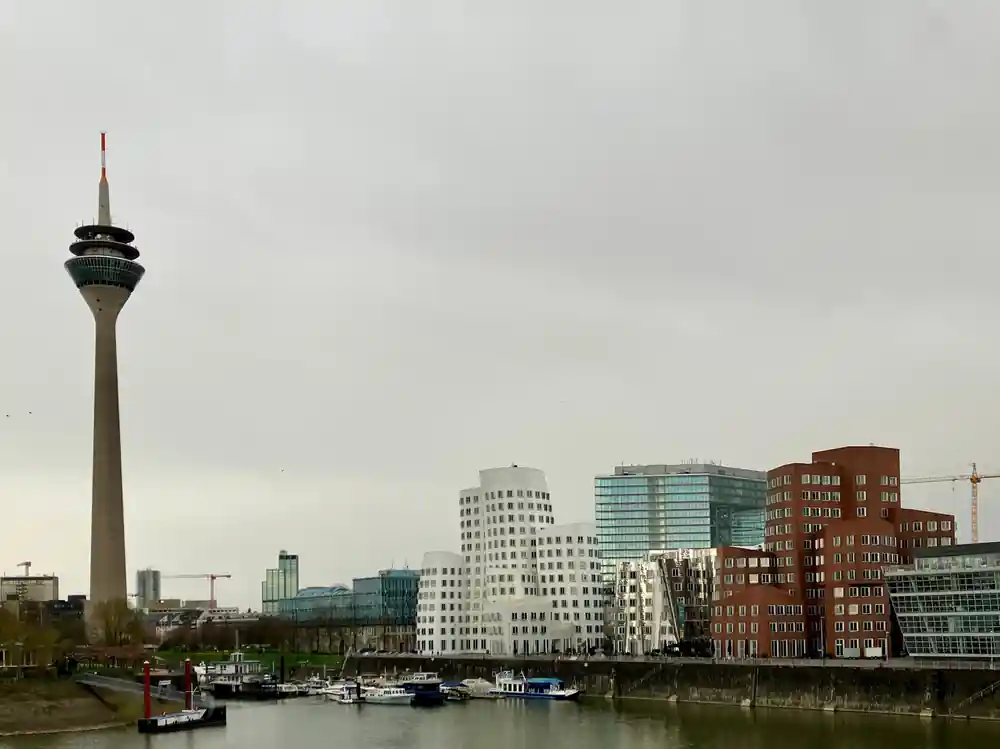
The Rhine Tower rises over the promenade where the harbour meets the river.
Car Parking Near the Harbour
Arriving by car puts you close to the water, but the harbour streets are narrow and busy, so the simplest plan is to park once and explore on foot. Multi-storey car parks and marked bays serve the district, and the approach from the ring roads is easier than threading through the Altstadt. MedienHafen maps are worth keeping offline, since the harbour streets look alike on a small screen.
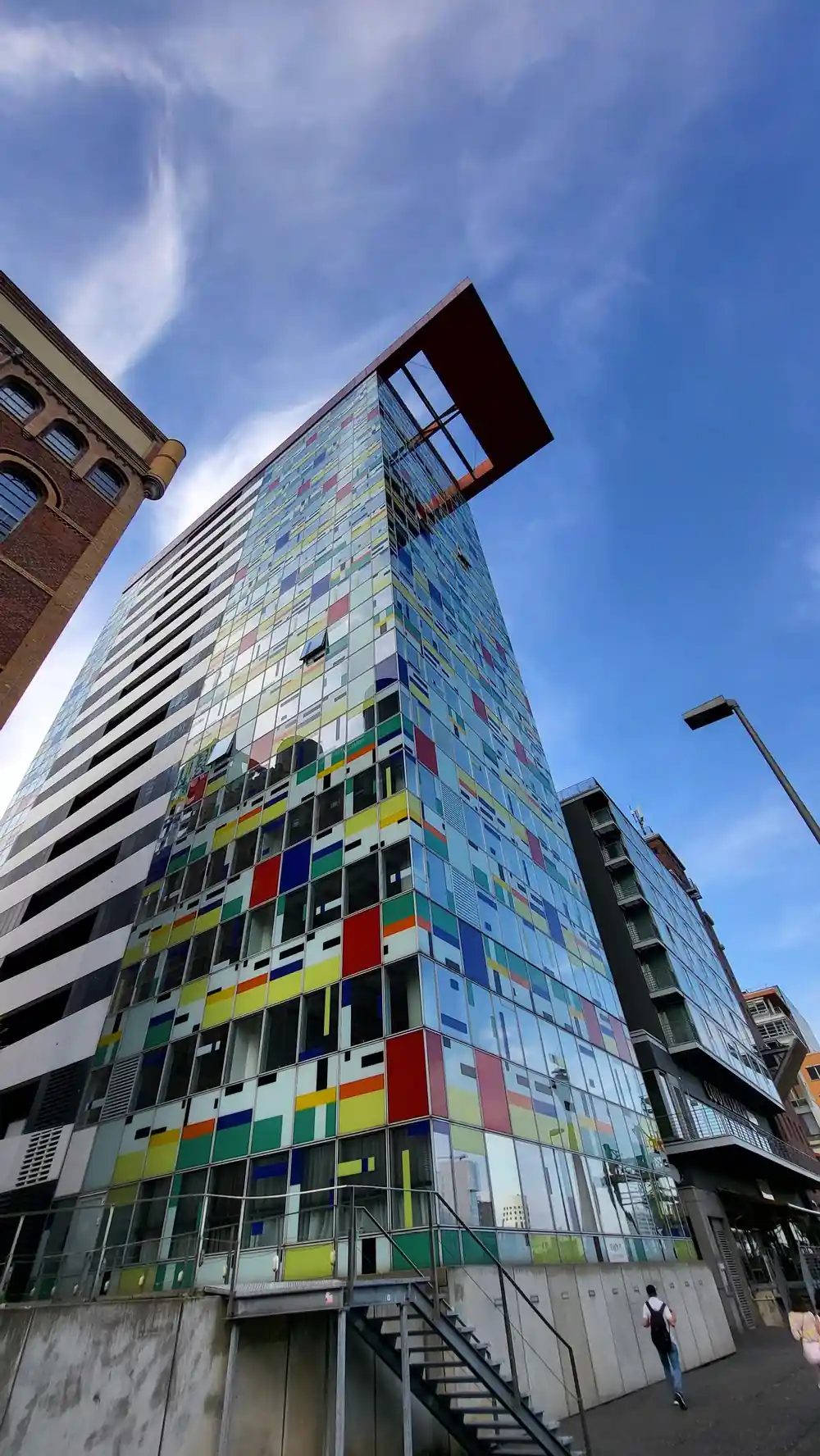
The district you are parking in was reshaped in the 1980s and 1990s, when the city's planners and developers turned a vacant working harbour into the MedienHafen media district.[11] It is now home to more than 700 companies,[12] and Fashion ID Gmbh & Co. KG is among the businesses headquartered in Düsseldorf.[13] Look up as you cross the water: the Colorium Building, designed by the British architect Will Alsop, stands 17 stories tall.[14]
Treat the car as a base for the day. Harbourside bays fill up when the offices empty, so arrive earlier if you can, and keep a card handy for machines that do not take notes. If your hotel is in the centre, leave the car there and take the tram to the harbour.
Taxis and Ride-Share Services
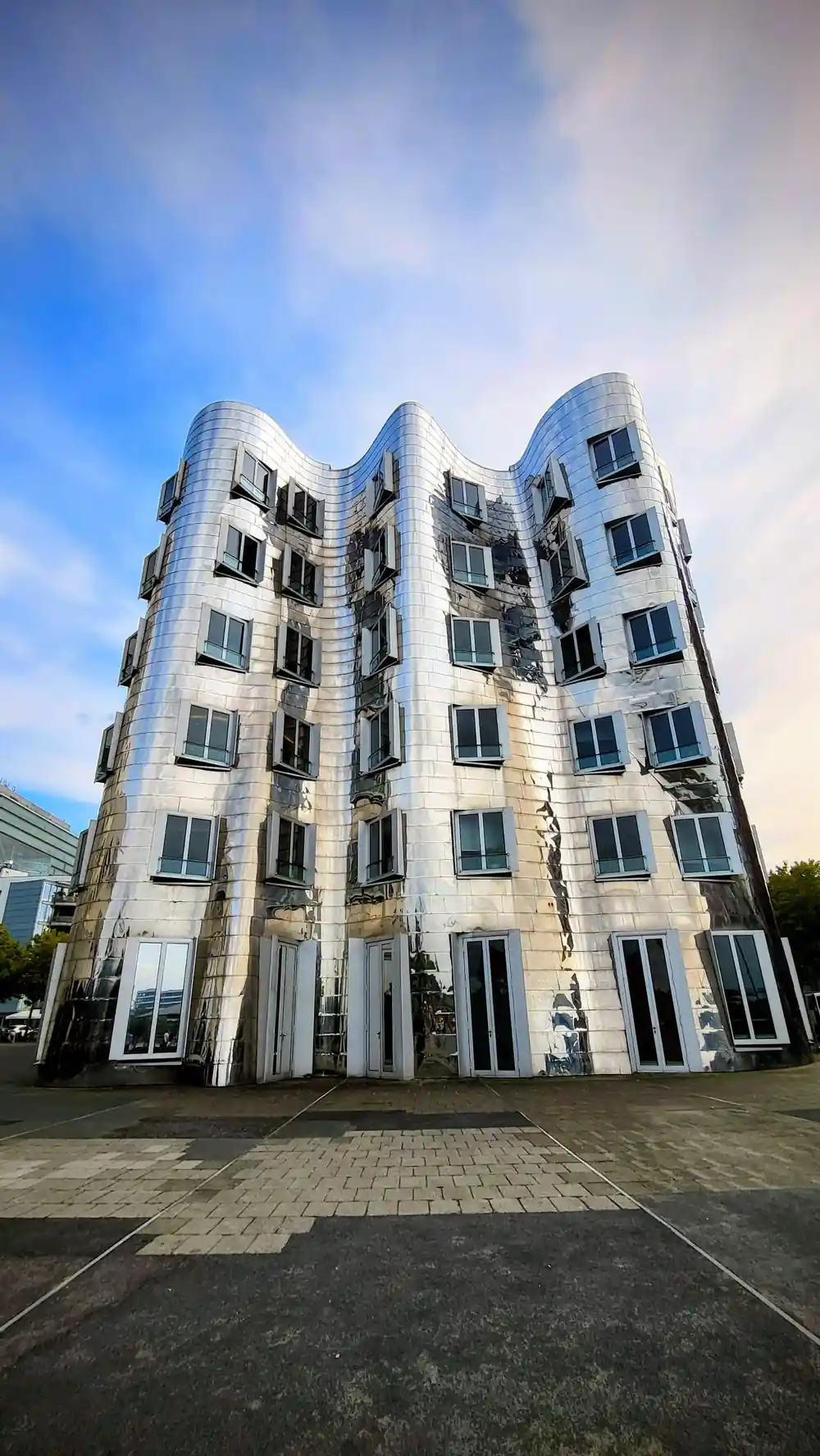
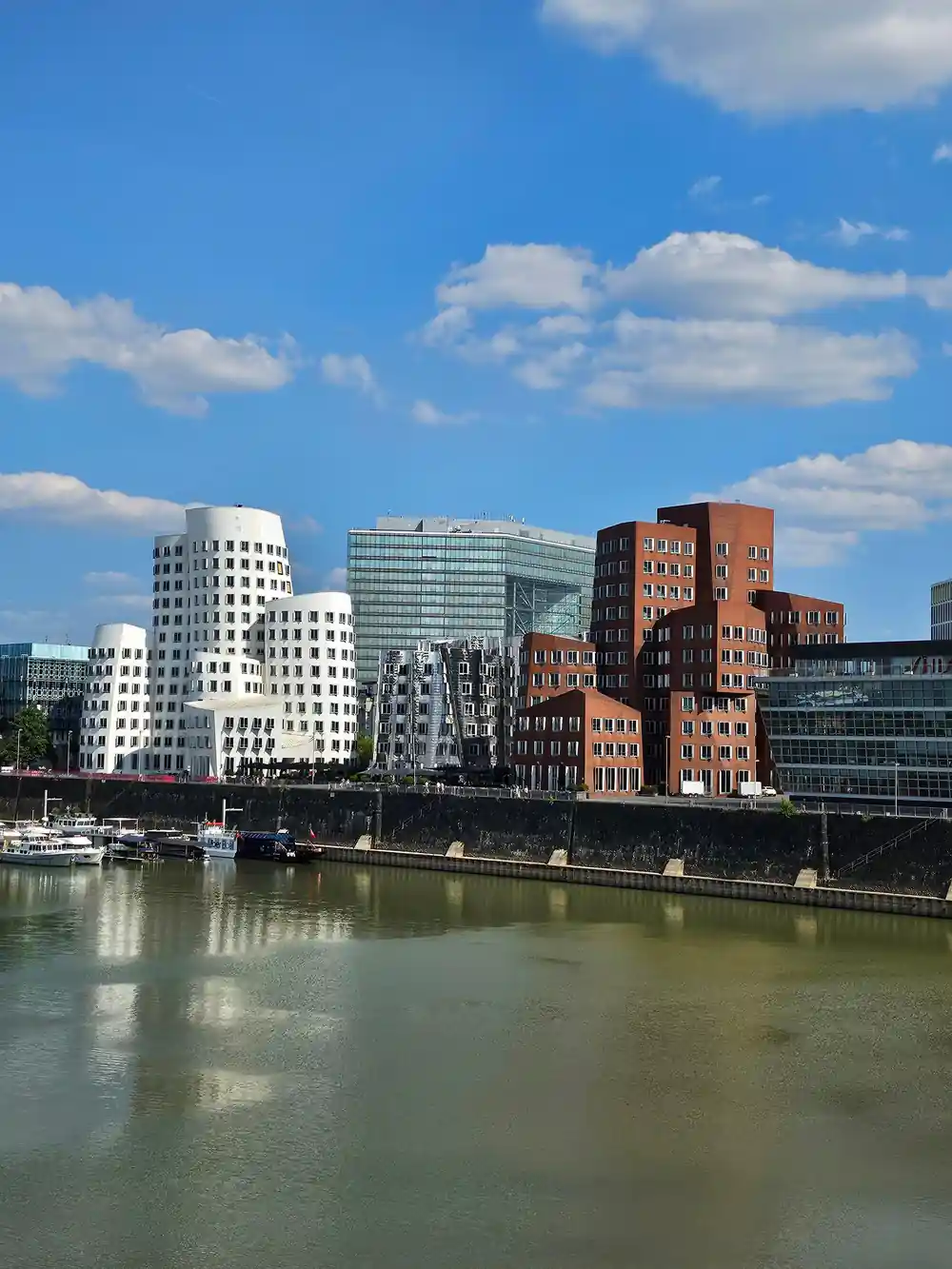
A taxi or ride-share car is the easiest way in with luggage, in the rain, or after a late train. Give the driver a landmark rather than a street name, such as the Rheinturm or the promenade. The Neuer Zollhof, a complex of three buildings designed by Frank Gehry, was completed in 1999 and is hard to miss from the road.[15] It also helps to type MedienHafen into Google Maps and show your driver the pin.
Sort out the meeting point before you set off, and pass the details to your driver rather than an approximate idea of the harbour. The MedienHafen Tour runs 2 hours with a live guide in German and English, a private group option is available, and you can reserve now and pay later, with free cancellation up to 24 hours in advance for a full refund and prices from US$218.[1]
from US$218
The MedienHafen Tour runs 2 hours with a live guide in German and English, rated 4.64 from 276 reviews.[1]
Arrival by Bicycle
The Rhine path makes the harbour an easy target on two wheels, and cycling lets you keep moving along a riverfront that runs well past the tour route. The river itself is 1320 km long, and the Düsseldorf stretch is flat and open.[16]
Bike share docks and rental shops mean you can ride without bringing your own bike, and the promenade is wide enough for cycling when it is not crowded. Lock up properly, push your bike where signs ask you to, and expect a headwind on the way back. A bike also makes the trip from the Altstadt to the harbour quick, so you can combine both in one afternoon.
Water and Boat Access
Boats dock along the promenade a short walk from the harbour, and a cruise is an easy way to see the city from the water. A one hour sightseeing cruise costs from US$23.[17] A winter afternoon cruise on the Rhine runs 2 hours, costs from US$32, is wheelchair accessible and can be cancelled up to 3 days in advance for a full refund.[18]
Water has shaped the district in less welcome ways. The docks that once lay at the southern end of the Rheinuferpromenade were in place at the end of the 19th century and helped the city boom until the end of WWII,[19] and the river still tests the harbour's flood defences: in 1995 the Rhine crested at 10.69 meters at Düsseldorf.[20]
E-Scooter and Micro-Mobility Options
Shared e-scooters and shared bikes cluster around tram stops and bridgeheads, which makes them handy for the last kilometre into the harbour. Park them in marked spots and keep them clear of the promenade edge where people walk. Whatever you ride, check the app and the local rules on the day, since the operators and the zones change.
If you would rather be shown around on wheels, the Segway tours cover the city and the river. The two hour Segway tour along the Rhine costs from US$91 and is rated 4.90 from 189 reviews,[21] and the classic city Segway tour also runs 2 hours and costs from US$91.[22] Both use live guides who speak German and English.[21][22]
However you arrive, the last stretch is on foot, so wear shoes you can walk in and keep an eye on the weather. Arriving early leaves room for a coffee by the water and a proper look at the buildings before your guide starts talking.
GetYourGuide ratings for tours in this guide
Every value is a rating stated by a GetYourGuide listing:[1][8][9][21].
What the tours in this guide cost
All amounts are GetYourGuide from-prices in US dollars:[1][8][21].
When to arrive and when to book
Getting to the MedienHafen
Pick your route
Decide between tram, car, bike or boat before you leave. Each one drops you within a short walk of the water.
Book the tour
Reserve the MedienHafen Tour ahead, choose a start time that fits your transport plan, and read the cancellation terms.
Note the meeting point
Save the meeting point and pass it to your driver if you are arriving by taxi or ride-share car.
Plan your parking
If you drive, head for a harbour car park rather than the narrow riverside streets, and keep your ticket with you.
Arrive with time to spare
Come early, look at the buildings along the water, and be ready to walk, because the tour is on foot.
Add a boat or a bike
Pair the tour with a Rhine cruise or a cycle along the promenade if you have a spare hour or an afternoon.
Walk the harbour with a guide who knows every building
from US$219Reserve now & pay later