Quick summary
- A former working harbour turned media quarter, home to more than 700 companies and a short walk from the old town.[1]
- Multi-storey garages and street bays sit at the edge of the harbour; park once and explore the quays on foot.
- The Düsseldorf: MedienHafen Tour runs 2 hours with a live guide in German and English, from US$218.[2]
- The guided city architecture walking tour takes 2 hours and starts from US$23.[3]
- Reserve now and pay later, with free cancellation up to 24 hours in advance for a full refund.[2]
- Top choice MedienHafen Tour from US$218 Duration2 hours[2]Live guideGerman, English[2]Rating4.64 from 276 reviews[2]CancellationFree cancellation up to 24 hours[2] Check availability
- Rhine Segway Tour from US$91 Duration2 hours[4]Live guideGerman, English[4]Rating4.90 from 189 reviews[4]CancellationFree cancellation up to 24 hours[4] See this tour
- Altstadt Guided Tour from US$218 Duration1.5 - 2 hours[5]Live guideGerman, English[5]Rating4.50 from 488 reviews[5]CancellationFree cancellation up to 24 hours[5] See this tour
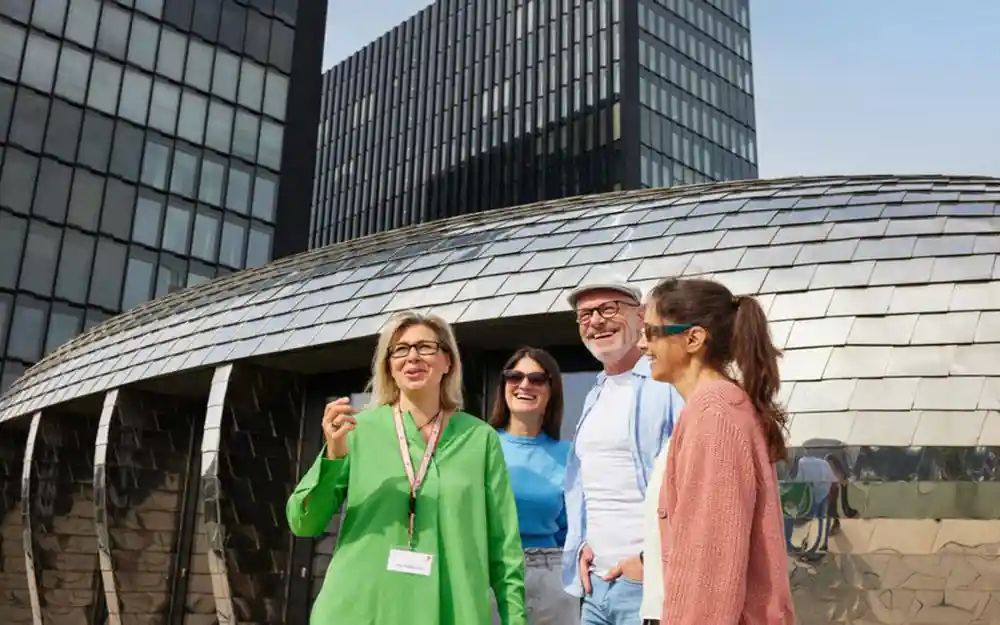
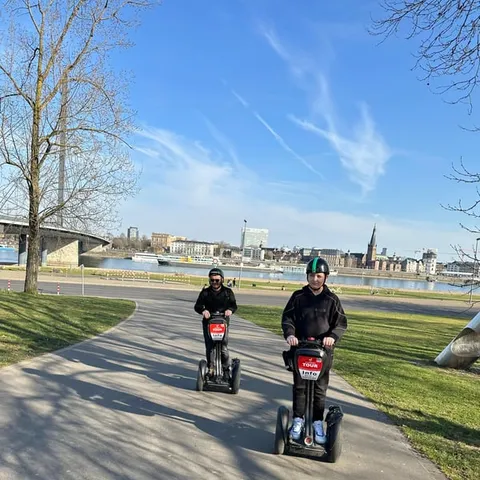
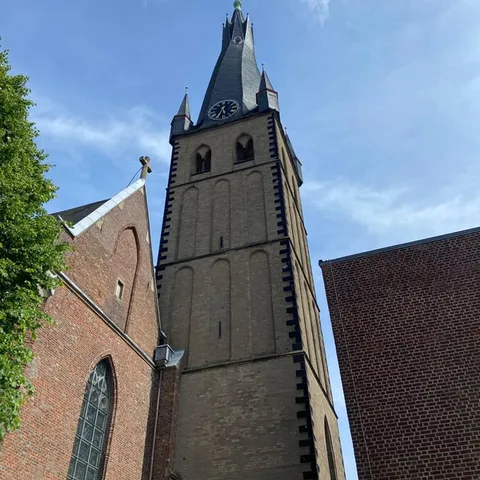
In the 1980s and 1990s, Dusseldorf's city planners and developers recognised an opportunity in the vacant waterfront.
Is the MedienHafen worth a morning with the car parked?
Getting there and parking
On the ground
Where the MedienHafen is and how drivers arrive
The MedienHafen is Düsseldorf's old working harbour, the stretch of water and quays south of the Altstadt that was rebuilt as a media and office district. City planners and developers reimagined the vacant waterfront in the 1980s and 1990s,[8] and the district is now home to more than 700 companies.[1] Agencies, broadcasters, architects and restaurants share the quays with some of the boldest modern buildings in the city, and the whole quarter is built for looking at as much as for working in.
The harbour sits on the same bank of the river as the old town. The Rhine embankment promenade runs one and a half kilometers along the water,[9] and you can walk south from the Altstadt into the MedienHafen on flat ground. Drivers usually arrive from the city side, park at the edge of the district and finish the visit on foot among the quays, basins and narrow streets.
Distances inside the harbour are short. Park once and you can reach the Gehry buildings, the waterfront and the Rhine Tower without moving the car, which leaves the whole half day free for walking. A meal by the water afterwards needs no second journey.
Parkhaus MedienHafen: how the garages work
The MedienHafen is served by multi-storey garages rather than one single car park. They sit at the edges of the district, a short walk from the water, and they are a straightforward option if you want to leave the car for a few hours and forget about it. Entrances open off the main approach roads, so slow down as soon as you see the harbour and read the signs rather than trusting a navigation app to the last metre.
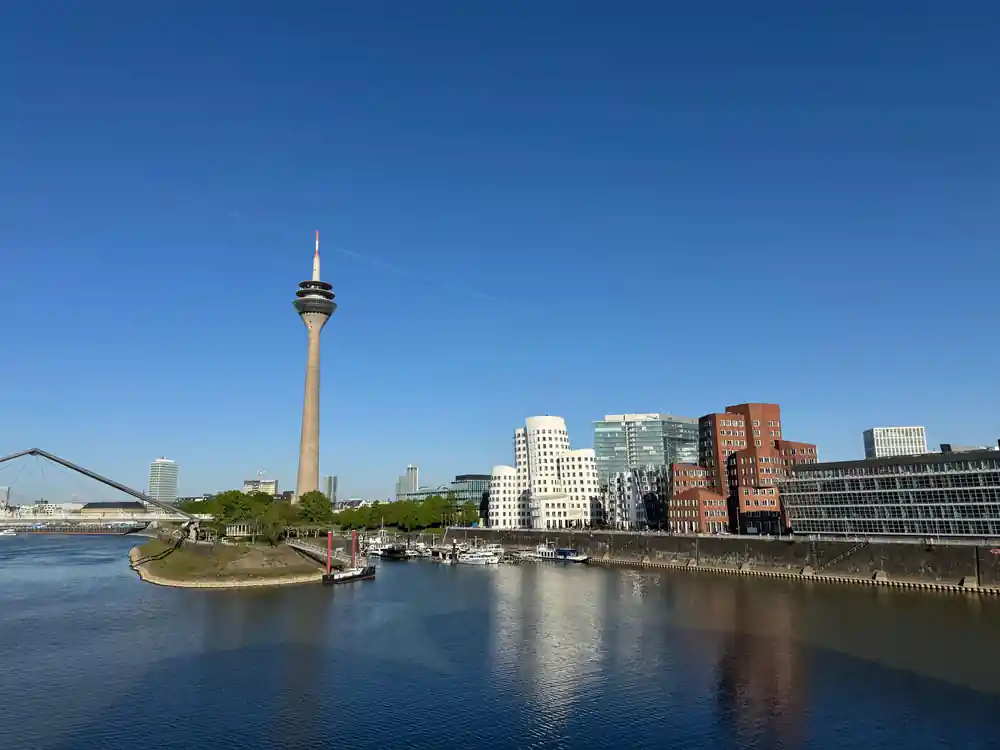
Inside a garage, note the level and the bay number before you walk away, and photograph the sign if that helps. Above ground, the harbour is a puzzle of quays, bridges and small streets, and it is easy to come back to the wrong side of a basin. Use the Rhine Tower as a compass: it soars 240.5 metres above the city and was built between 1979 and 1982,[10] and it stays visible from almost everywhere in the district.
Expect competition for spaces at busy times. If a barrier is down or a level is full, drive on to the next garage or a bay a few streets back rather than circling the quays, where people are constantly crossing.
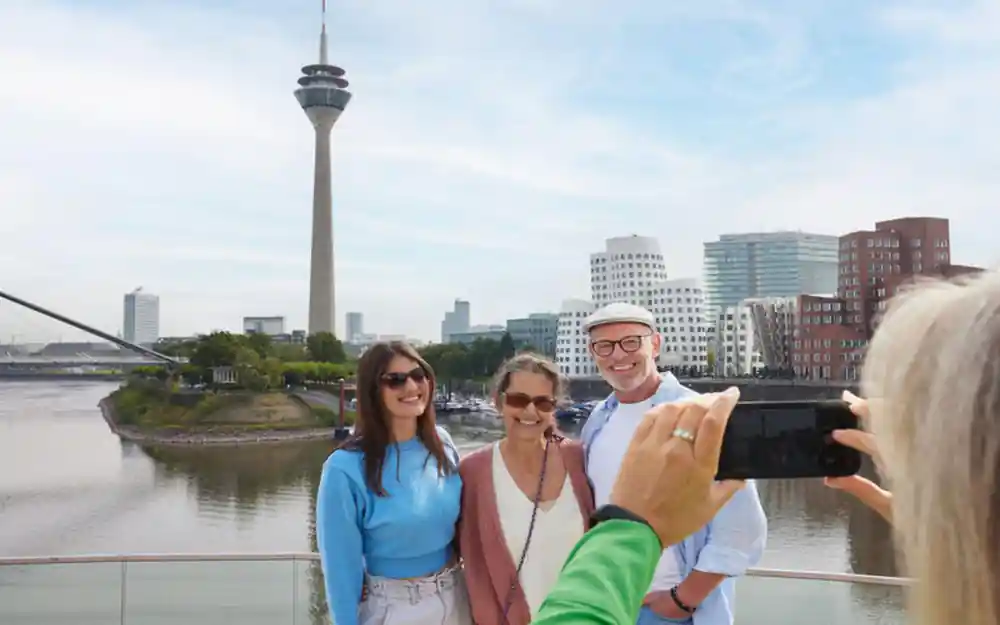
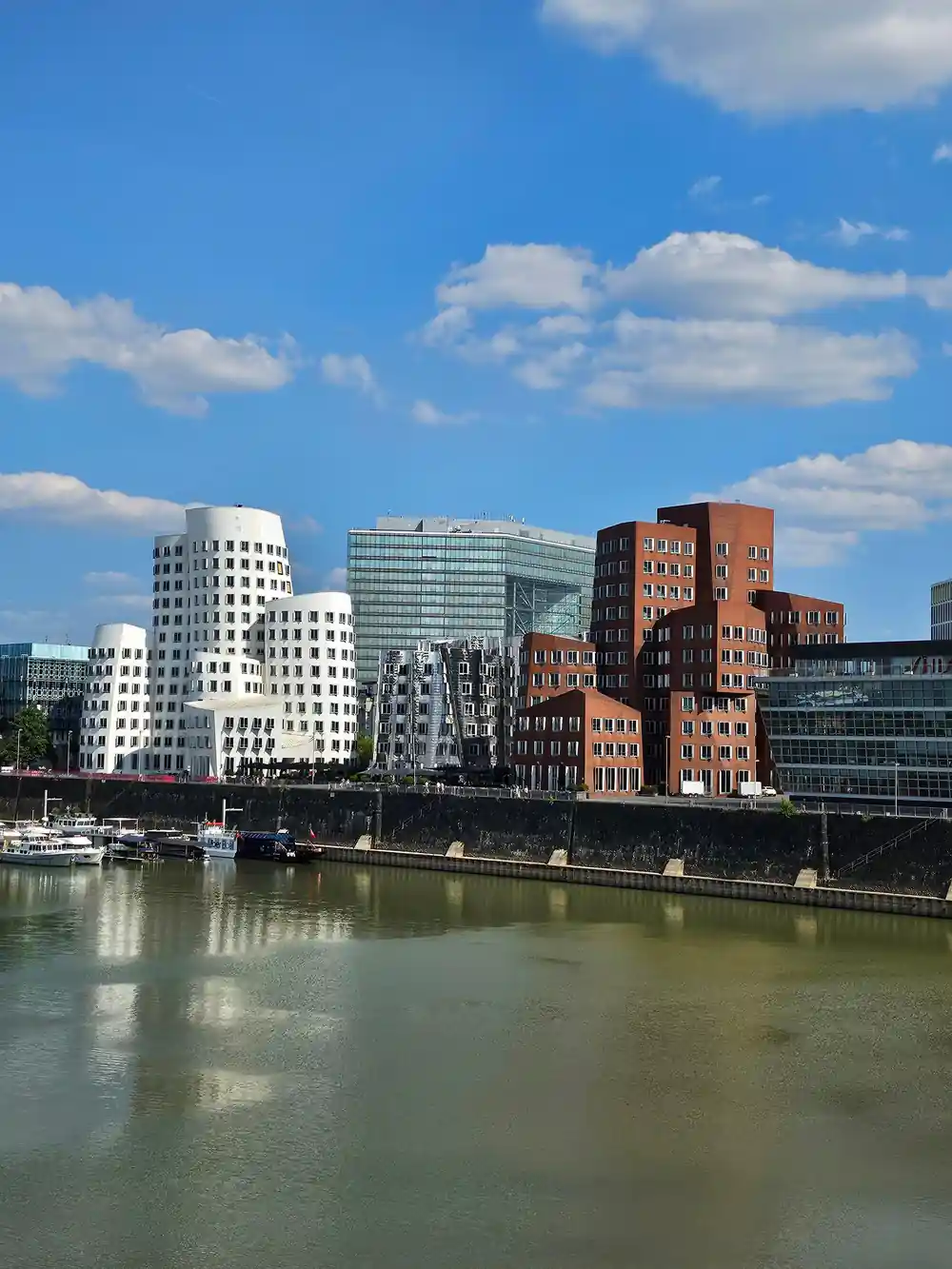
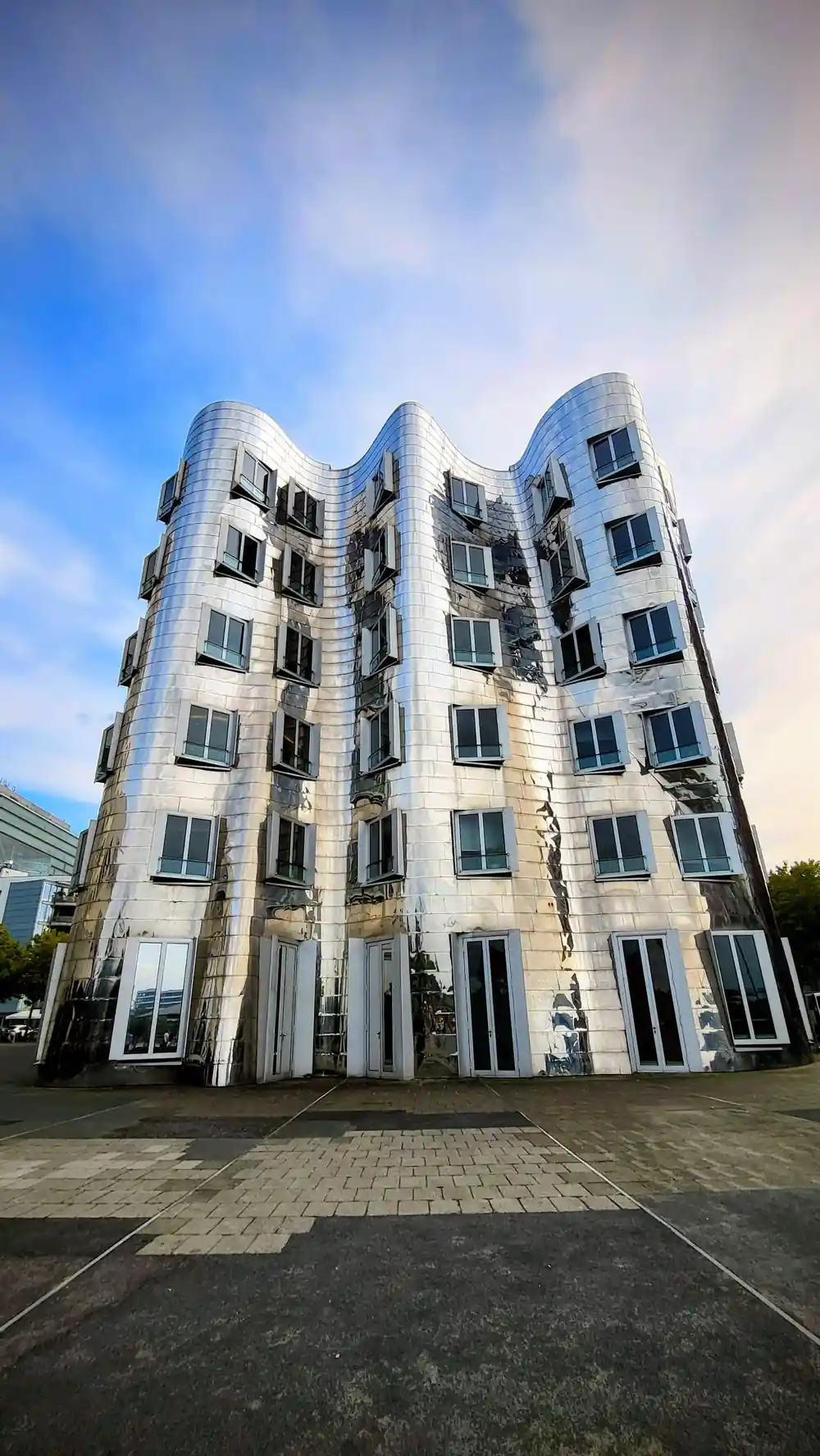
Curved facades and coloured panels rise straight from the harbour water in the MedienHafen.
Q-Park MedienHafen and street parking nearby
Medienhafen parking falls into two groups: multi-storey garages and street bays. Look for the Q-Park MedienHafen signs on the approach roads if you would rather use a garage than hunt for a bay. Garage parking suits a visit of a few hours, since you drive in, walk out into the district and come back when you are done. Street bays sit mostly on the roads behind the promenade rather than on the waterfront, and they turn over quickly, with residents, office workers and visitors all wanting the same few spaces.
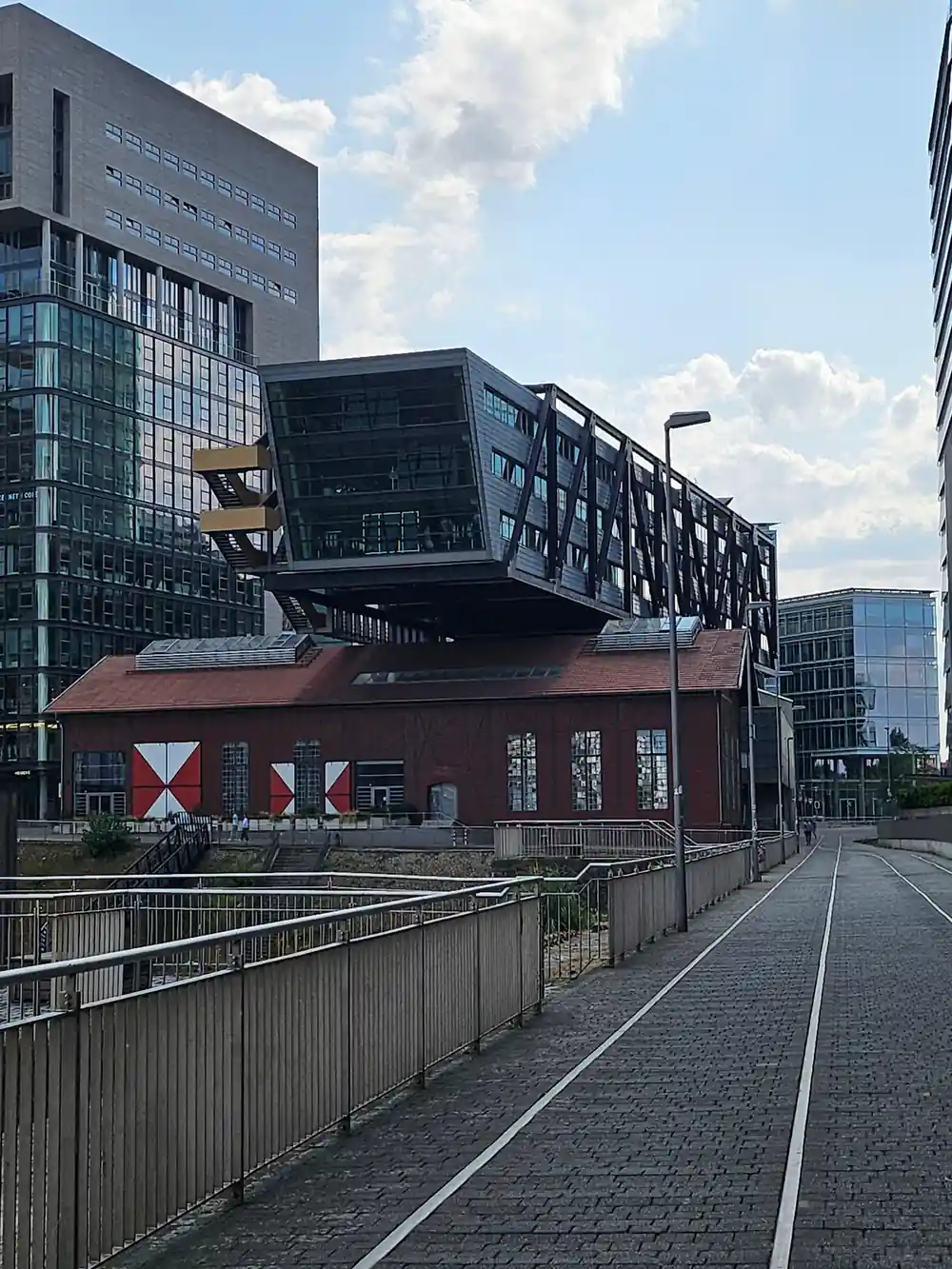
Do not plan to park on the promenade or on the quays. The riverside path is a walking and cycling route, and the harbour streets are shared with pedestrians. Leave the car a street or two back and enjoy the last few minutes on foot, which is where the district shows off: curved glass and pale plaster, coloured panels, moored boats and the cranes that still stand over the water.
If you are driving to a specific guided walk, look into the meeting point before you set off. Several walks in the harbour meet on the water side of the district, where there is nowhere to leave a car for long, so choose the garage that sits closest to the start. A few minutes of planning before the trip saves a rushed lap of the quays.
Arriving without a car
You can leave the car at the hotel and come down to the harbour on public transport or on foot. The hop-on hop-off ticket is one easy way to combine the MedienHafen with the rest of the city. It is valid 1 day from first activation, costs from US$28 and includes an audio guide in Spanish, Chinese, Dutch, English, French, German, Italian, Japanese, Russian and Arabic.[6] Stops include Königsallee, the Altstadt, the Rheinturm, the Rheinterrasse, the Nordpark, the Kunstakademie and the main station.[6]
Boat trips are another option if you are staying close to the river. The city sightseeing cruise on the Rhine runs 1 hour and starts from US$23, and you skip the ticket line at boarding.[7] It is a relaxed way to see the waterfront from the water before walking the quays, and it pairs well with an afternoon in the MedienHafen.
For shorter journeys, simply walk. The promenade links the old town with the harbour along the river, and once you are in the district everything worth seeing is close together, which leaves the car as more of a liability than a help.
from US$218
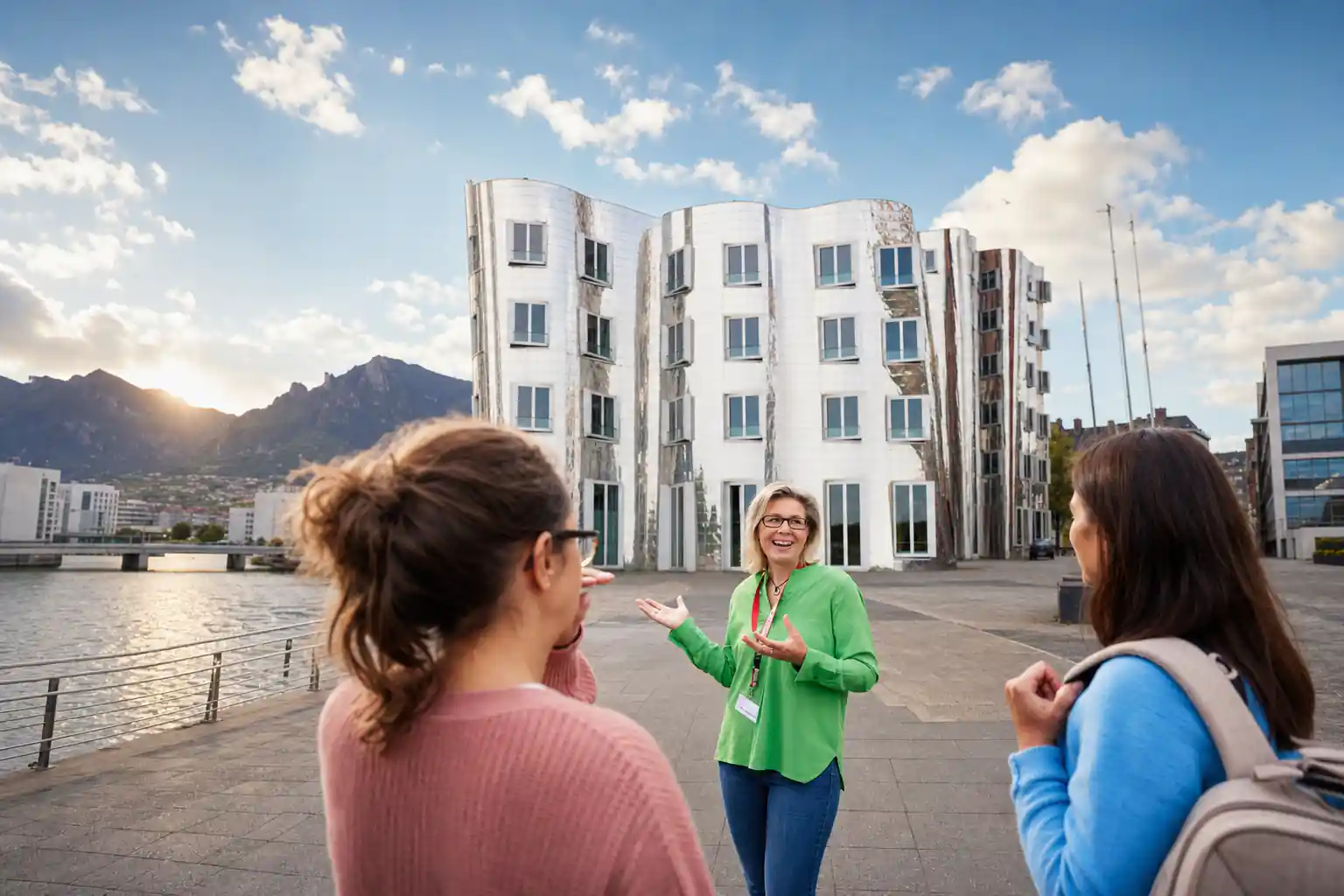
The MedienHafen Tour runs 2 hours with a live guide in German and English, rated 4.64 from 276 reviews.[2]
What to see once the car is parked
Start with the Neuer Zollhof, the complex of three buildings designed by Frank Gehry that was completed in 1999.[11] Their curved, leaning facades are the image the district is known for, and they are rewarding to see from the opposite bank of the basin as well as from the quay in front, where the shapes seem to change with every step.
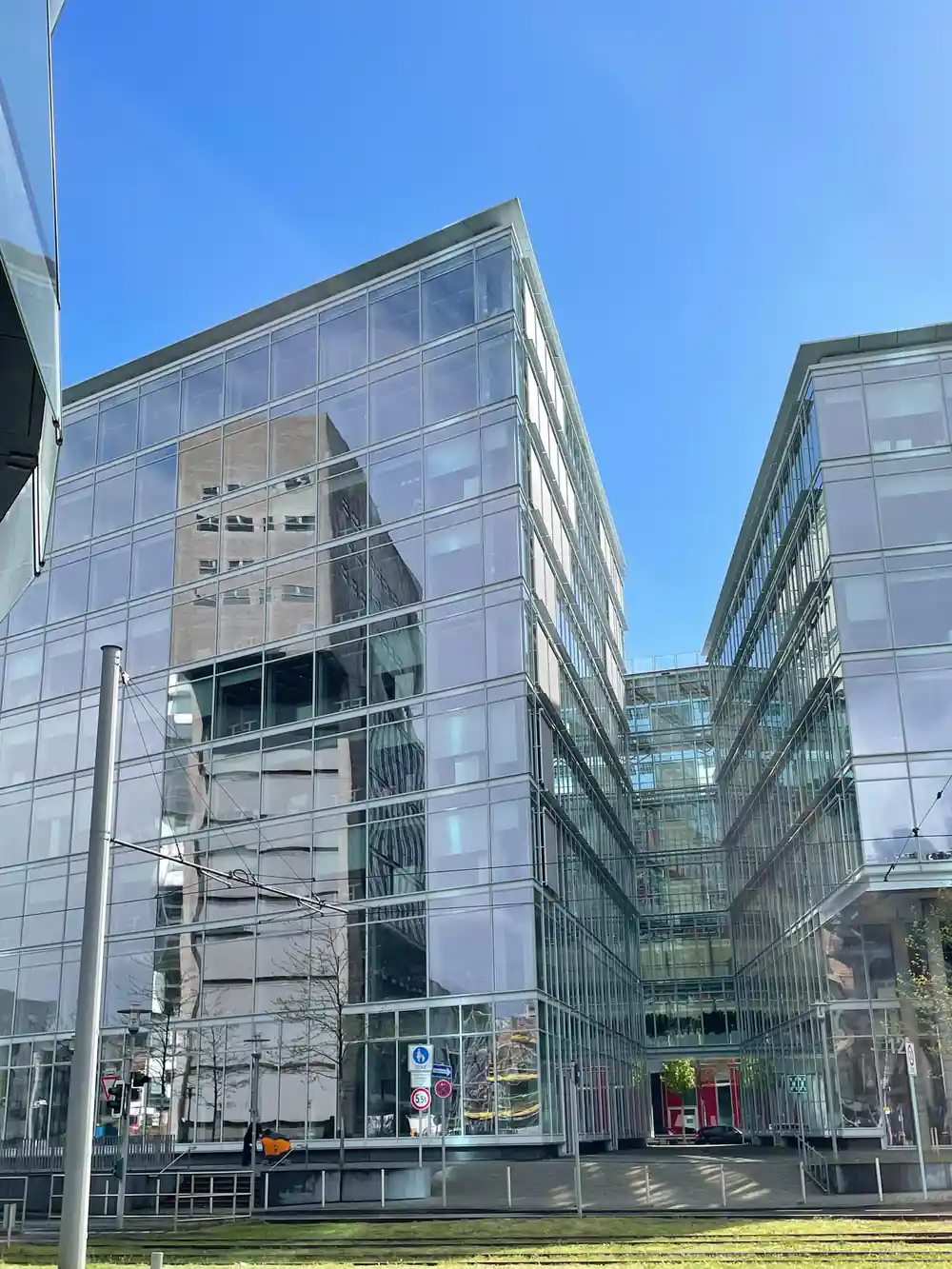
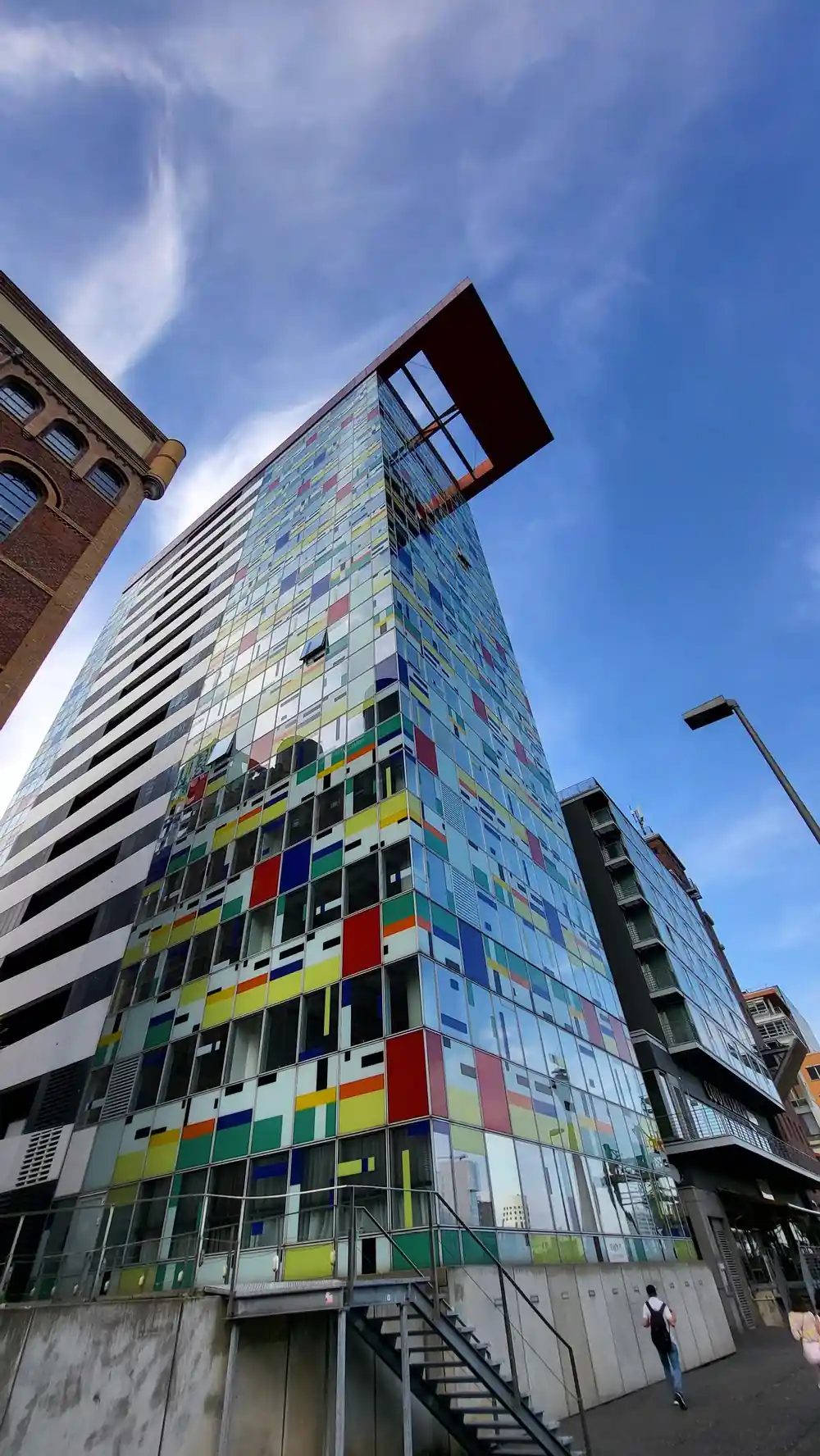
A few minutes away stands the Colorium, a modern building designed by the British architect Will Alsop that rises 17 stories along the Rhine.[12] Its coloured glass panels give the harbour a different note from the white plaster of the Gehry buildings, and the two together turn a walk here into an open air lesson in modern architecture.
Then there is the Rhine Tower, the landmark that anchors the district. It is 240.5 metres tall and was built between 1979 and 1982,[10] and the Lichtzeitpegel, the light clock designed by Horst H. Baumann, shows the time on its shaft with a vertical series of lights.[13] Looking up from the quays costs nothing, and the tower makes a natural end point for the walk back towards the old town.
The Rhine, the docks and the district today
The water in front of you is the Rhine, 1320 km long.[14] Barges still work their way along it, and the basins behind the promenade keep a harbour feel even though the cranes now stand beside offices. The river shaped this part of the city long before the media companies arrived: at the end of the 19th century the docks stood at the southern end of the promenade and played a part in the city's boom until the end of WWII.[15]
Flooding is part of the harbour's story. In 1995 the Rhine crested at 10.69 metres at Düsseldorf, testing the harbour's flood defences.[16] Walking the waterfront, the relationship between river and buildings is easy to read: warehouses and offices stand close to the water, with the promenade keeping a strip of dry ground in between.
The district is a working quarter as much as a visitor attraction. More than 700 companies are based here,[1] from media and advertising businesses to fashion companies such as Fashion ID Gmbh & Co. KG, listed with headquarters in Düsseldorf in a RevenueBase list of fashion digital marketing agencies.[17] Düsseldorf recorded 3,068,803 guest arrivals in 2018,[18] and the harbour is one of the districts the city puts on show.
Timing your visit and choosing a tour
The Düsseldorf: MedienHafen Tour is the obvious place to start if you want the district explained. It lasts 2 hours, has a live guide in German and English, and a private group is available.[2] It starts from US$218, you reserve now and pay later, and free cancellation is available up to 24 hours in advance for a full refund.[2] Check availability to see starting times.
Other guided options cover the same quays. The guided city architecture walking tour takes 2 hours, starts from US$23 and follows a route from Königsallee to Kö-Bogen, the Dreischeibenhaus and the Ehrenhof.[3] The Altstadt guided tour runs 1.5 to 2 hours from US$218,[5] and the two hour Segway tour along the Rhine starts from US$91 for anyone who would rather roll than walk.[4]
Whatever you book, dress for the water. The harbour is open to the wind off the river, there is little shade along the quays, and a walk that feels warm in the Altstadt can feel cool a short while later by the basins. Comfortable shoes matter more than anything else, and the car will be waiting in the garage when you are done.
From prices for guided tours in Düsseldorf
Every value is the GetYourGuide from price in US dollars for the listing cited:[2][3][4][5][6][19]
What a guided visit to the harbour costs
All amounts are GetYourGuide from prices in US dollars for the listings cited:[2][3][4][5]
When to plan your harbour visit
Plan your MedienHafen day
Book the tour first
Pick your harbour walk and reserve it before you travel. Starting times vary, so check availability when you book.[2]
Choose your parking
Decide between a multi-storey garage and a street bay in advance, and note the name so you are not circling the quays.
Leave the car behind
Park once at the edge of the district. The quays, the Gehry buildings and the Rhine Tower are all a short walk apart.
Walk the waterline
Follow the basins and the promenade, which runs one and a half kilometers along the river.[9]
Finish by the river
End at the Rhine Tower or take a boat trip from the waterfront before heading back to the garage.
See the MedienHafen with a local guide
from US$219Reserve now & pay later