Quick summary
- The MedienHafen Tour lasts 2 hours, is led by a live guide in German and English, and starts from US$218.[1]
- A private group is available on this listing, which helps if you want a slower pace or a quieter walk with your own party.[1]
- Reserve now and pay later, and cancel up to 24 hours in advance for a full refund.[1]
- The listing does not flag step-free access. Check with the operator before you book if a wheelchair or rollator is coming along.[1]
- The Rhine embankment promenade beside the harbour runs one and a half kilometers.[2] Benches and cafe terraces along the water give you places to pause.
- Top choice MedienHafen Tour from US$218 Duration2 hours[1]Rating4.64 from 276 reviews[1]Live guideGerman, English[1]Free cancellation24 hours before start[1] Check availability
- Rhine Segway Tour from US$91 Duration2 hours[3]Rating4.90 from 189 reviews[3]Live guideGerman, English[3]Free cancellation24 hours before start[3] See this tour
- Altstadt Guided Tour from US$218 Duration1.5 - 2 hours[4]Rating4.50 from 488 reviews[4]Live guideGerman, English[4]Free cancellation24 hours before start[4] See this tour
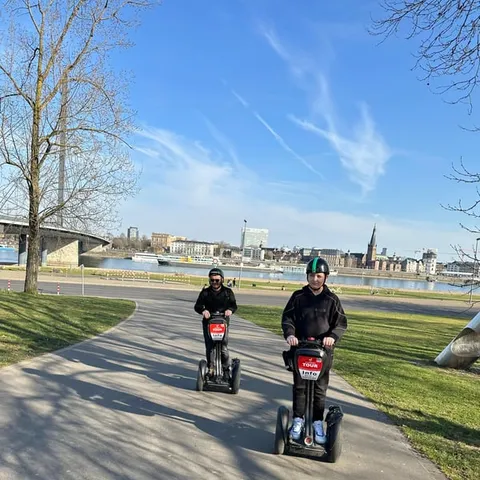
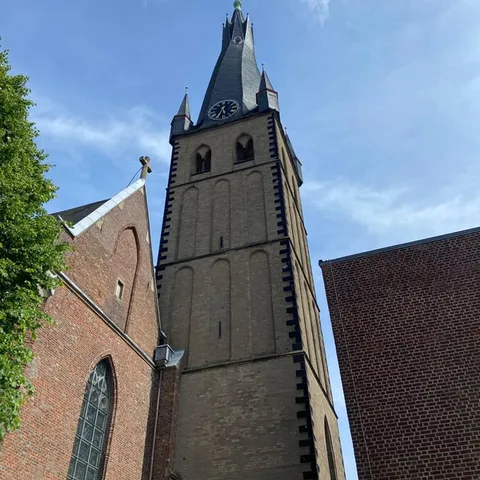
The prerequisite for the one and a half kilometers of quality of life was the construction of the Rhine bank tunnel.
Is the MedienHafen Tour right for your family?
Access and comfort
- Ask about step-free access before booking, as the tour listing does not flag it
- Private group option suits families who want their own pace
- A two-hour walk with plenty of chances to stand aside
- Free cancellation if plans change before the tour
With children and dogs
- Bring water and hats; the quays are open and exposed
- Confirm dog rules with the operator before you book
- Book an early slot if you want a calmer start
- Pick a meeting point the children can spot from far away
Wheelchair and rollator access on the MedienHafen route
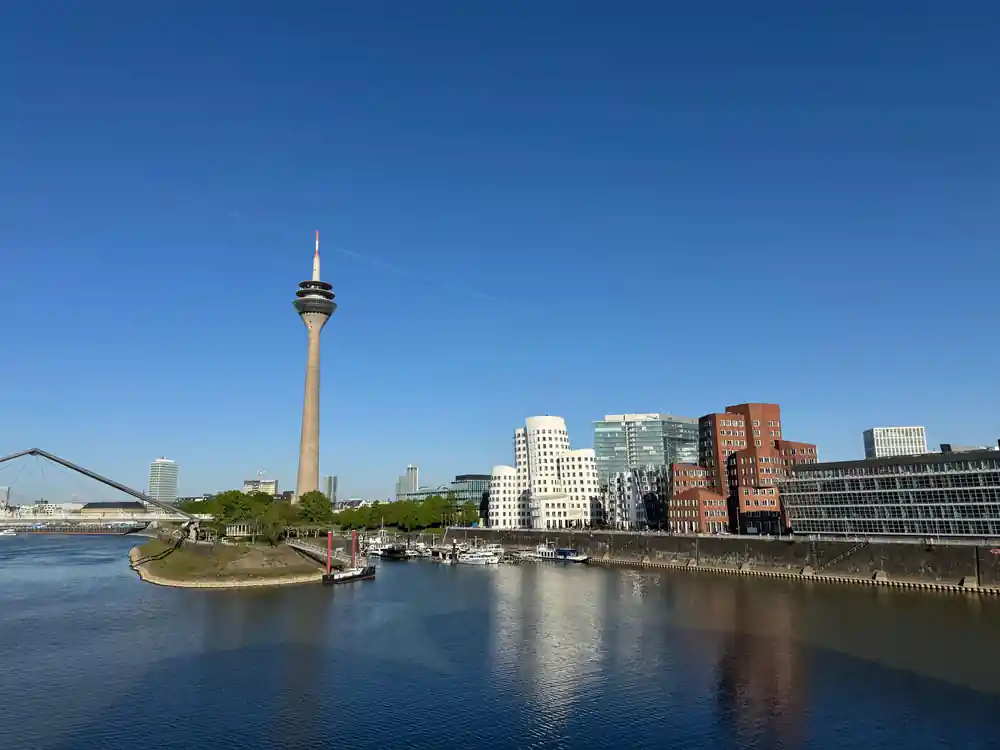
Dusseldorf's city planners reimagined the vacant former working harbour as the MedienHafen media district during the 1980s and 1990s.[5] What they left behind is a district of wide quaysides, bridges and open water, with a river promenade alongside and buildings where an old town would have hills. For anyone using a wheelchair, a rollator or a walking stick, that layout is easier to manage than a medieval centre: the ground around the dock basins is broad and level, and there are no cobbles to catch a wheel. The Rhine embankment promenade beside the district is one and a half kilometers long.[2] Walking here feels open rather than enclosed, and the bridges between the basins break the route into short, manageable stages.
The MedienHafen Tour listing does not carry a step-free or wheelchair access label. Confirm the route with the operator before you book if a wheelchair or rollator is coming along, and ask about kerbs, bridge surfaces and anywhere the group goes indoors. The same listing offers a private group option and a live guide who speaks German and English, and the walk lasts 2 hours.[1] A private departure helps here: you set the pace, you choose how long to stand at each building, and there is no pressure to keep up with strangers. Elsewhere in the city, the Rhine Tower entry ticket is listed as wheelchair accessible,[6] and so is the winter afternoon boat cruise on the Rhine.[7]
Bringing a stroller or pram to the harbor
Prams work well in the MedienHafen. The quays around the dock basins are paved and level, the distances between the landmarks are short, and the Rhine embankment promenade that runs past the district is one and a half kilometers long.[2] That length matters. If a small passenger falls asleep, you can keep walking well beyond the tour without ever being far from the water, a bench or a cafe. At the end of the 19th century, the docks at the southern end of the Rheinuferpromenade played a part in the city's boom until the end of WWII,[8] and the same waterfront is now open, easy ground for a buggy.
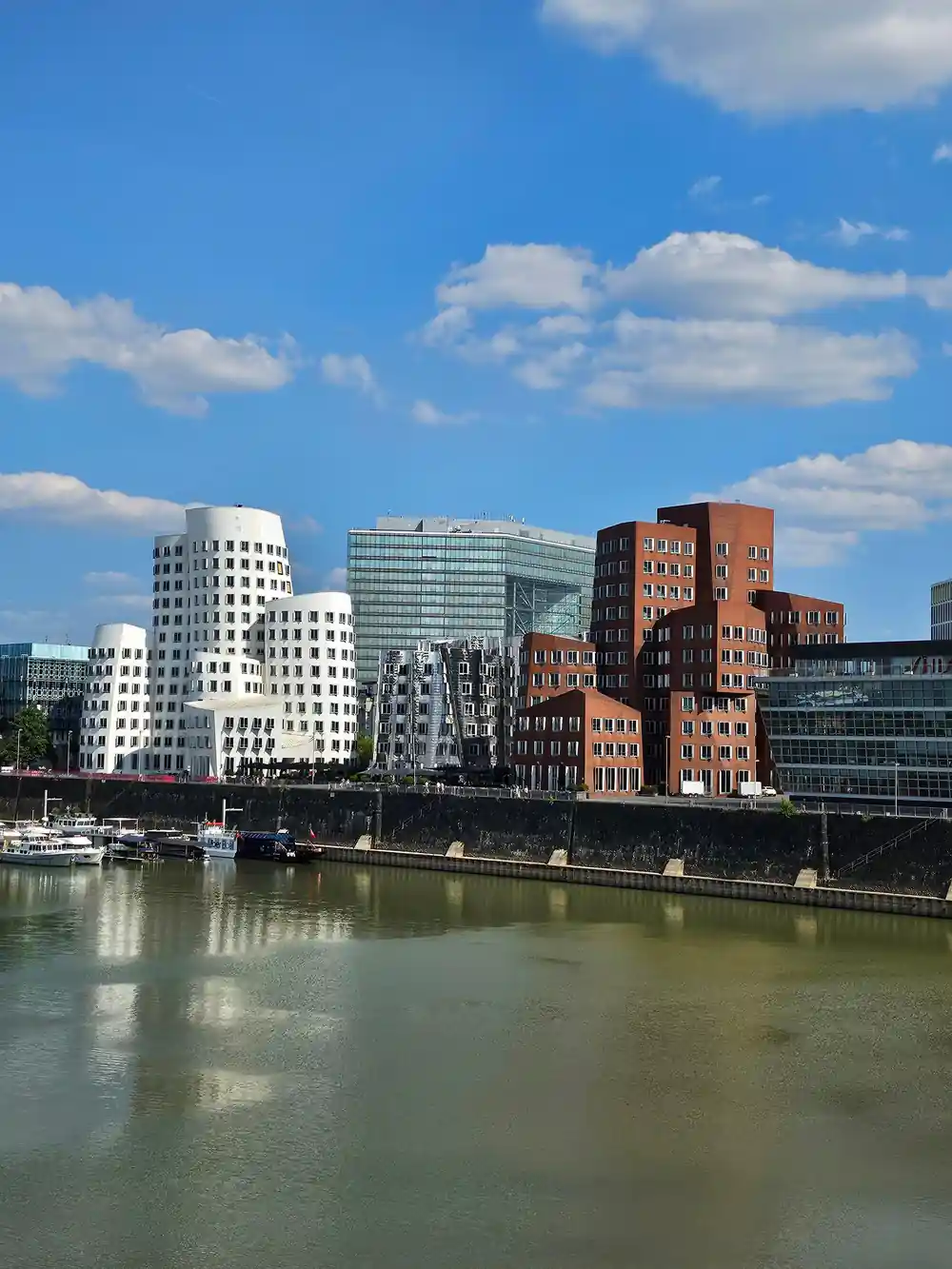
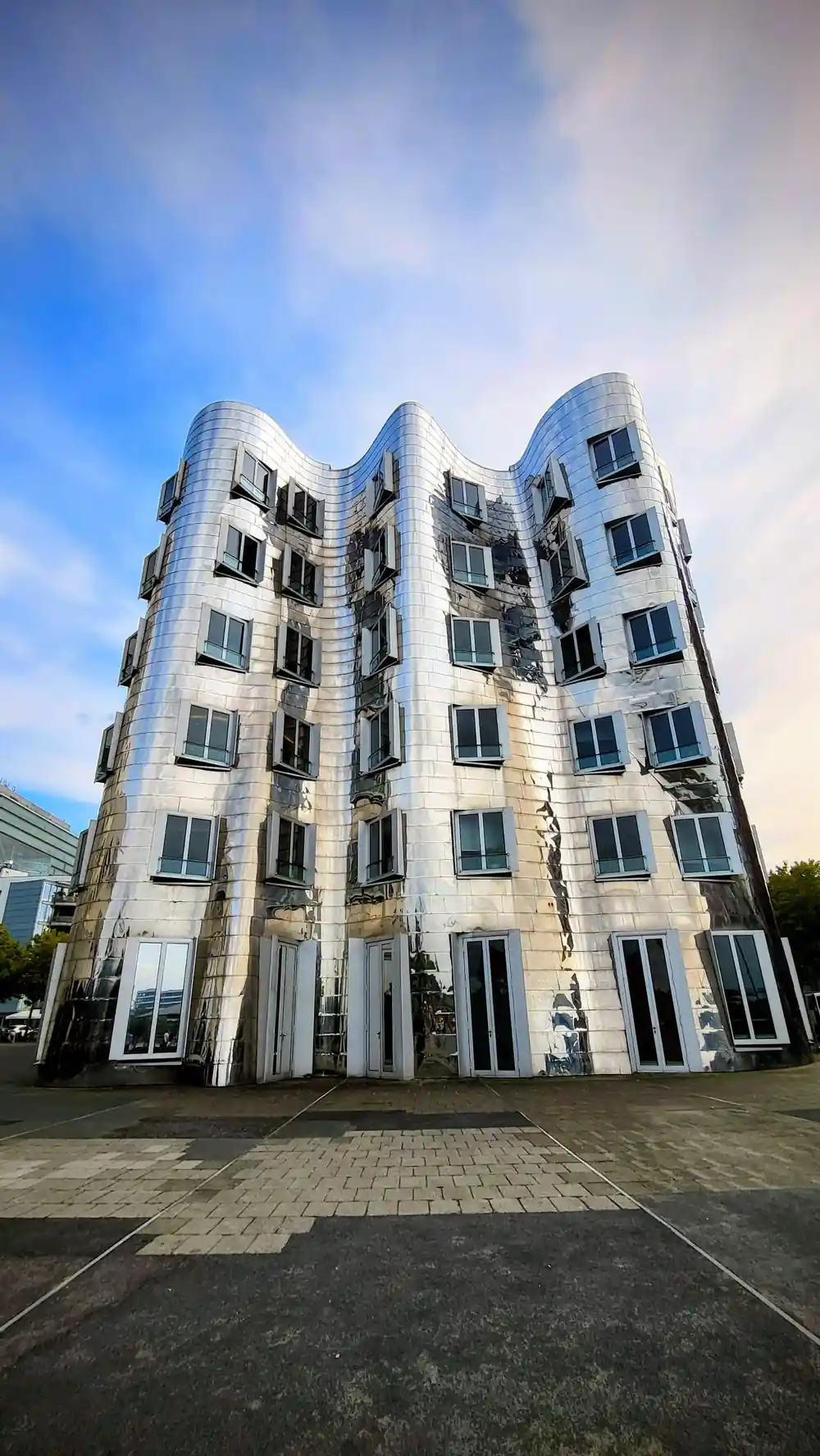
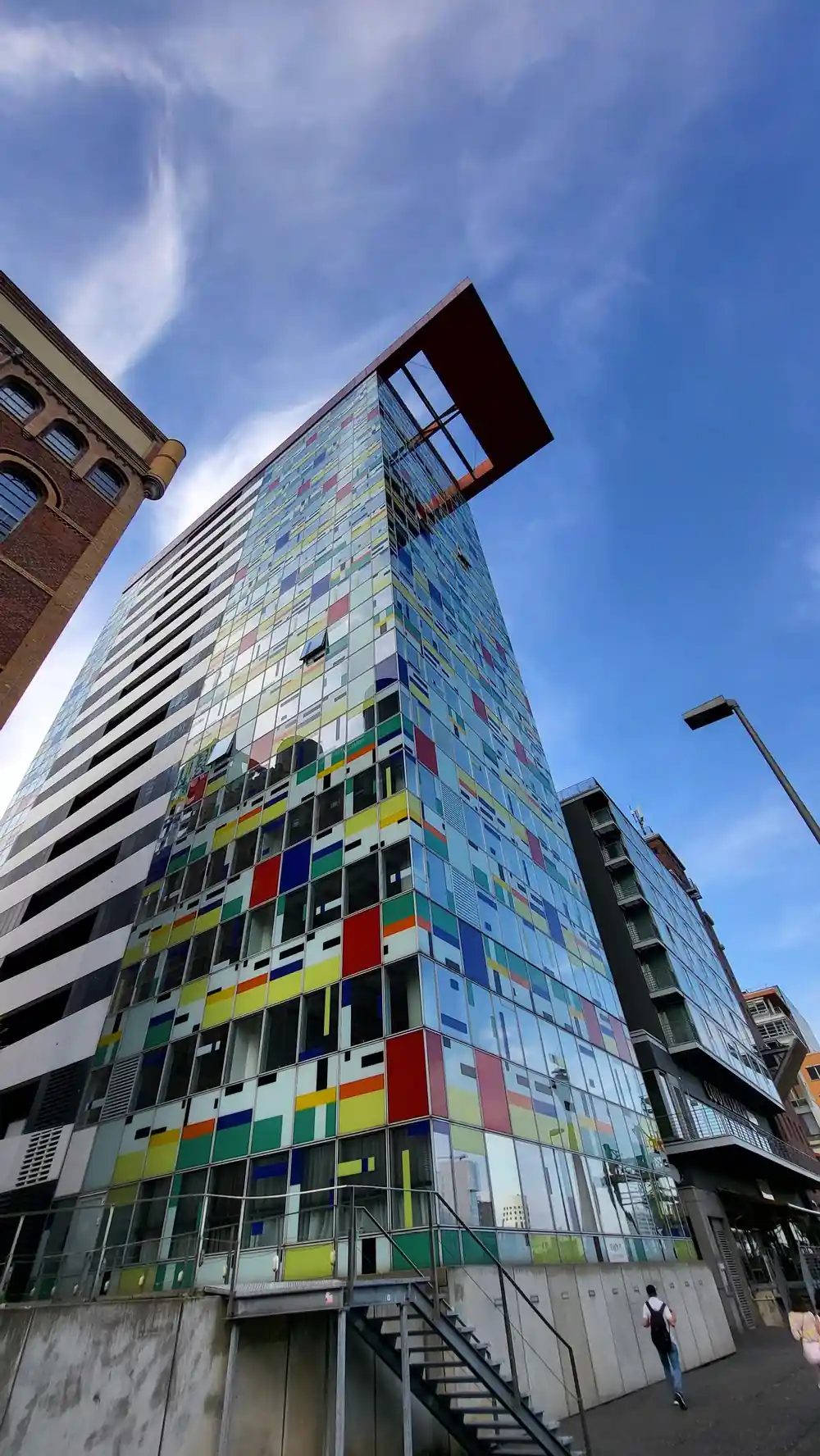
Two landmarks make useful meeting points if you plan to hang back with a pram. The Neuer Zollhof is the Frank Gehry complex of three buildings completed in 1999,[9] and it sits at the water's edge, leaning and tilting in a way that is easy to spot from far off. The Colorium, designed by Will Alsop, stands 17 stories tall close by,[10] so a parent pushing a buggy always has something recognisable to steer towards. Tell the guide at the start that you may travel a little slower. The MedienHafen Tour is 2 hours long, and there is no need to rush between stops.[1]
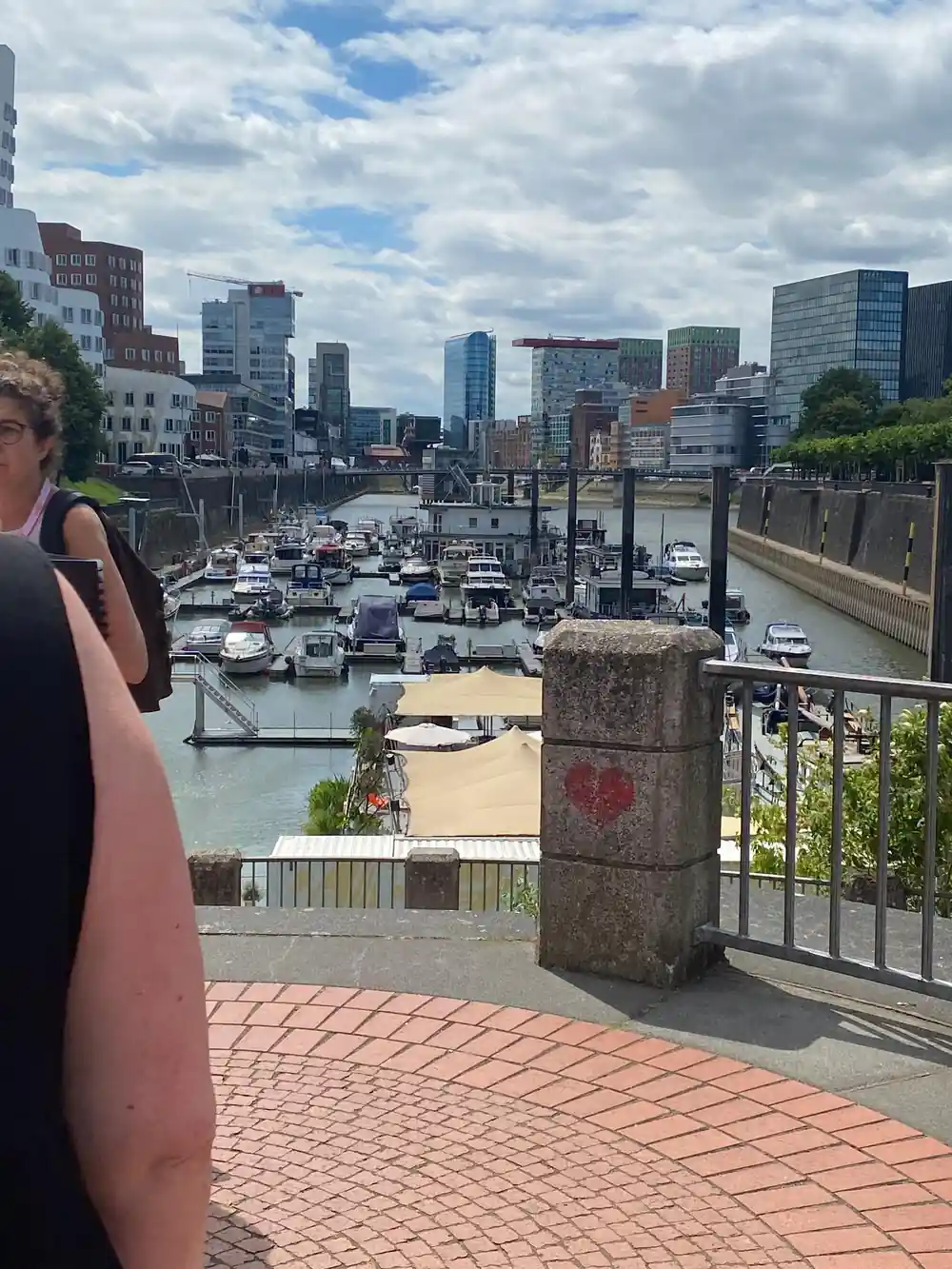
The Neuer Zollhof by Frank Gehry sits on the MedienHafen waterfront.
Dogs allowed on the walking tour
The MedienHafen Tour listing says nothing about dogs, so treat this as an open question and ask the operator before you pay. Worth checking: whether a lead is needed throughout, whether any part of the route goes indoors, and how the guide feels about a dog walking near a group of strangers. Free cancellation applies up to 24 hours in advance for a full refund,[1] which means you can hold a date now and still change your mind if the answer is no. Ask early as well: the private group option on this listing is the arrangement that gives you the most control over the route.[1]
The district itself is largely open air. The MedienHafen is home to more than 700 companies,[11] and the quays, bridges and waterside paths between those buildings are public ground rather than ticket halls. If your dog is relaxed on paving, comfortable in a group and used to the sound of water and passing cyclists, a harbour walk of 2 hours is a reasonable outing.[1] Bring a bowl and water in warm weather, keep the lead short near busy cafe terraces, and use the wide promenade to give other walkers room to pass.
Keeping children engaged throughout the two-hour tour
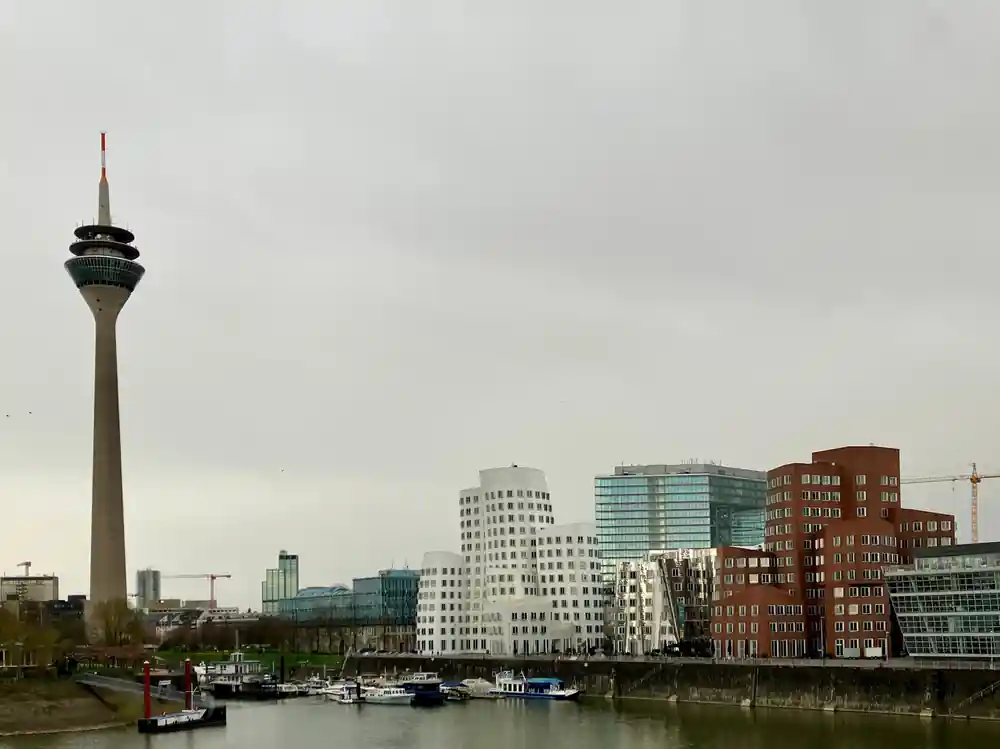
Two hours is a comfortable stretch for most children, and the harbour gives them plenty to look at while they walk. Start with the tower. The Rheinturm is 240.5 metres tall and was built between 1979 and 1982,[12] and the light clock on its shaft, an installation by Horst H. Baumann called the Lichtzeitpegel, shows the time with a vertical series of lights.[13] Counting the lit segments as they change is a good way to keep small legs moving. The Rhine itself is 1320 km long,[14] so there is a great deal of water to watch from the quay.
Then let each child pick a favourite building. The Neuer Zollhof, Frank Gehry's complex of three buildings completed in 1999, leans and curves in a way children notice at once.[9] The Colorium stands 17 stories tall and is wrapped in printed glass panels.[10] Düsseldorf with kids works best with short bursts of looking followed by a snack, so plan a break in the middle and let the guide's stories carry the second half. The MedienHafen Tour runs for 2 hours with a live guide in German and English,[1] and questions are welcome as you go.
from US$218
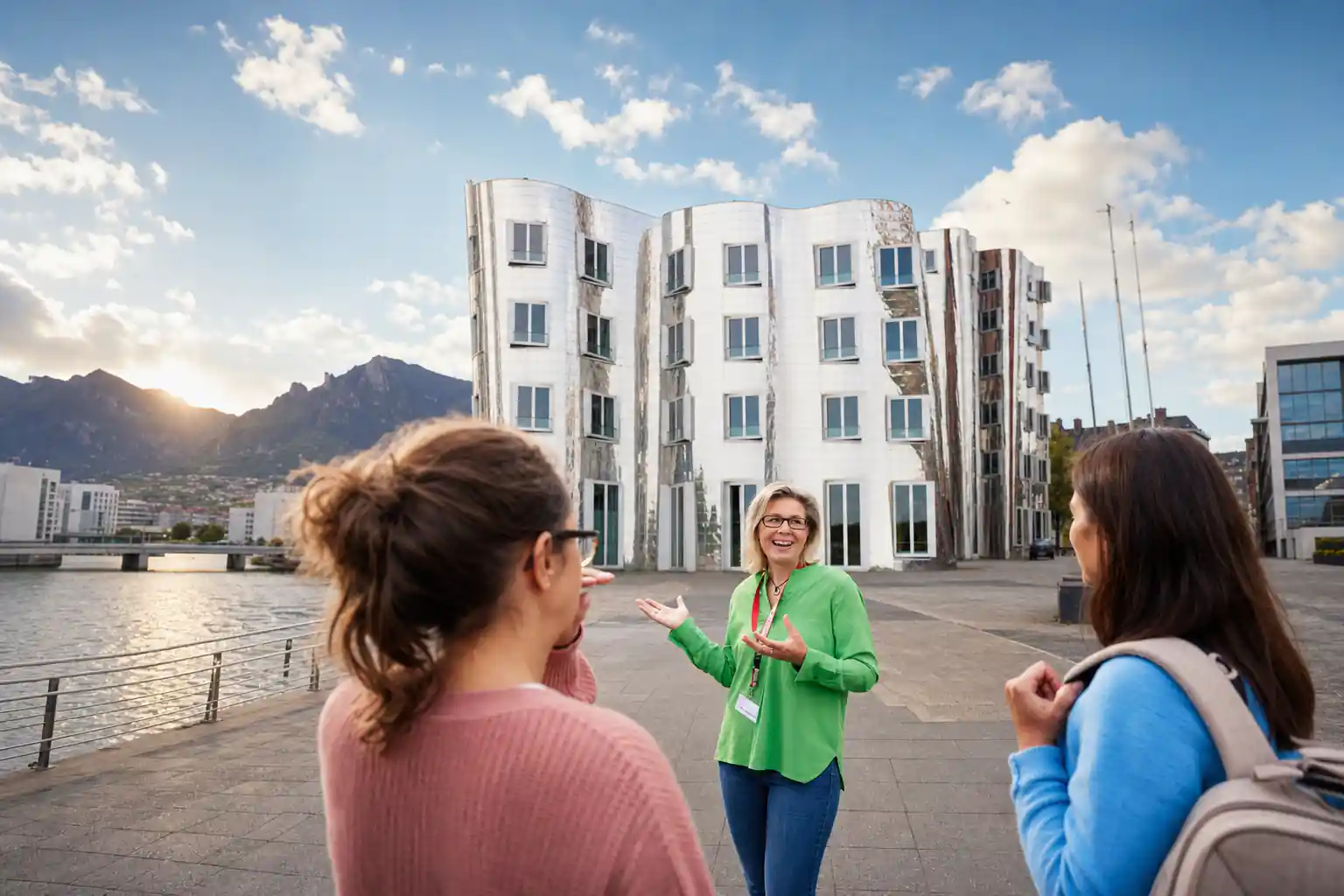
A 2-hour live-guided walk in German and English, with a private group option and free cancellation up to 24 hours in advance.[1]
Benches and rest points along the harbor walk
The harbour is generous with places to sit down. The Rhine embankment promenade beside the district is one and a half kilometers long,[2] and along it there are low walls, benches and cafe terraces where you can stop for a coffee or a plate of something small. The MedienHafen is home to more than 700 companies.[11] The waterfront stays open and unhurried even when the offices are busy, and there is usually a free seat facing the water. For a family, the simplest plan is a pause at each dock basin: one stop for a snack, one for photographs, and one for the view back towards the old town.
Rest points matter more than people expect on a guided walk. If grandparents or a pram are part of the group, tell the guide at the start that you may drop to the back for a few minutes. The MedienHafen Tour runs for 2 hours,[1] and the ground is level enough that catching up is straightforward. Booking the private group option puts the day entirely on your own schedule,[1] which is the other way to build in as many stops as you like, and free cancellation up to 24 hours in advance leaves room to change the date.[1]
Hearing the guide in a large group
The MedienHafen Tour is led by a live guide who speaks German and English.[1] On open quaysides, wind off the water and the background hum of a working district can swallow a voice. Stand close at each stop and pick the side where the wind is at your back, and you will catch far more of what is being said. Düsseldorf recorded 3,068,803 guest arrivals in 2018.[15] Other groups and cyclists pass along the waterfront during a walk, so keep half an eye on the space behind you when the group bunches up.
If anyone in your party has hearing difficulties, the private group option on this listing keeps you beside the guide for the whole 2 hours.[1] Reserve now and pay later is available, and cancelling up to 24 hours in advance brings a full refund,[1] which lets you hold a date and move it if the format does not suit. Ask the guide at the start about the order of the route, so you know where the open, windy stretches come and where the gaps between buildings give the group a natural pause.
Quieter options for sensory-sensitive visitors
The harbour is a wide, open place. Water, sky and low buildings give the eye room to rest, and the dock basins create natural gaps between crowds. Book a weekday morning if you want the calmest version of the walk. The MedienHafen Tour lasts 2 hours,[1] long enough to settle into the pace and short enough to step away from. The light clock on the Rheinturm, designed by Horst H. Baumann, is a useful focus point for anyone who finds a moving group overwhelming: watch the lights, breathe, and rejoin when you are ready.[13]
If you would rather not share the walk, the listing offers a private group option.[1] It also helps to know your exit. The promenade along the water is one and a half kilometers long,[2] so you can leave the group at any point and walk back at your own speed. A bench facing the Rhine makes a good place to reset. The river is 1320 km long,[14] and there is always something steady to watch before you decide what to do next. Free cancellation up to 24 hours in advance for a full refund gives you room to move your booking if the day looks too busy.[1]
From-prices of guided walks in Düsseldorf
Each bar shows the from price of the listing it names:[1][4][16][17][18]
What a guided walk costs per person
Each option shows the US dollar from price of its listing, and the child row repeats that same from price.[1][4][16][17]
When to book the MedienHafen Tour
Before reserving
Check access needs
Talk to the operator about wheelchairs, rollators and prams before you book. The listing does not label the route as step-free.[1]
Pick your time
Check availability for a starting time that suits nap times, meals or a calmer, quieter start to the day.
Settle dog questions
Ask about dogs, leads and indoor stops while you can still cancel for a full refund up to 24 hours in advance.[1]
Brief the children
Show them the Rheinturm, which is 240.5 metres tall, and its light clock before you set off.[12]
Plan a rest
The promenade along the Rhine is one and a half kilometers long.[2] Keep a waterside bench in mind as a fallback.
Walk the MedienHafen at your own family's pace
from US$219Reserve now & pay later