Quick summary
- The MedienHafen tour lasts two hours with a live guide in German and English.[1]
- The district is compact and level, with short flights of steps at bridges, so trainers and comfortable layers are enough.
- Harbour basins and quay walls mean moving air and cooler moments, so a thin windproof layer earns its place in any season.
- Free cancellation up to 24 hours in advance for a full refund, and you can reserve now and pay later.[1]
- A private group option is available, with prices from US$218.[1]
- Top choice MedienHafen Tour from US$218 Duration2 hours[1]Rating4.64 from 276 reviews[1]Live guideGerman, English[1]Free cancellationUp to 24 hours in advance[1] Check availability
- Altstadt Guided Tour from US$218 Duration1.5 - 2 hours[2]Rating4.50 from 488 reviews[2]Live guideGerman, English[2]Free cancellationUp to 24 hours in advance[2] See this tour
- City Architecture Walk from US$23 Duration2 hours[3]Rating4.74 from 65 reviews[3]Live guideGerman[3]Free cancellationUp to 24 hours in advance[3] See this tour
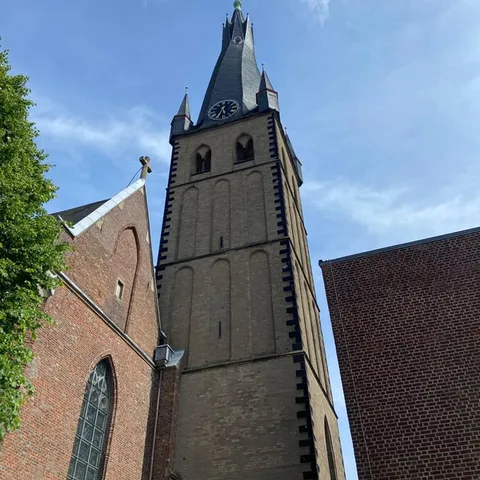
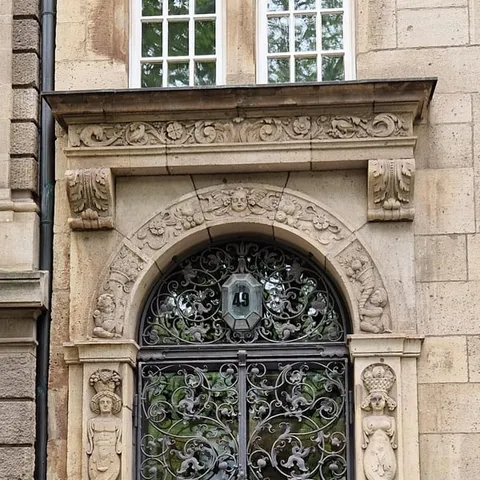
The MedienHafen is home to more than 700 companies and some of the best and most popular restaurants in the city.
Is the MedienHafen walk worth two hours?
Before reserving
On the day
- Flat, closed shoes with grip handle cobbles, bridge decks and wet stone.
- Layer up: the quays are open to river wind even on mild days.
- Expect cooler air at the water's edge than in the streets behind the harbour.
- Plan a toilet stop before the walk starts; cafes and restaurants are handy for one.
Walking Distance and Pace Over Two Hours
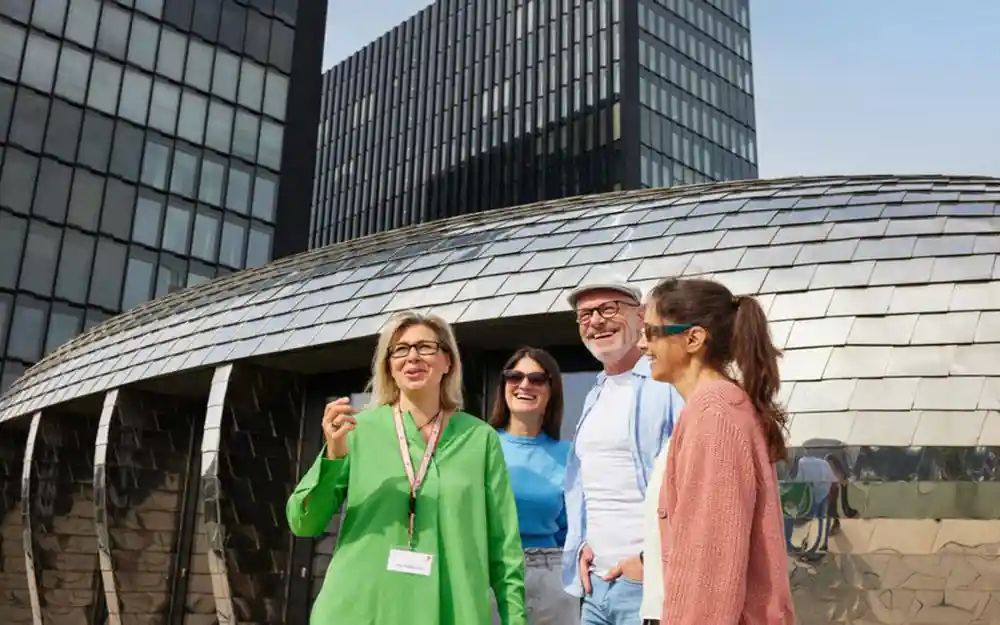
The MedienHafen tour runs for two hours and is led by a live guide in German and English.[1] The walk stays inside one compact quarter of the city, a grid of quays, footbridges and waterfront blocks that was reimagined from a vacant working harbour into a media district during the 1980s and 1990s.[4] Nothing here is far from anything else, so the route unfolds as a gentle amble with regular pauses to look up at facades, watch the water and take photographs rather than a long march between sights.
Start times vary by date, so check availability to see starting times when you book.[1] You can reserve now and pay later, and free cancellation applies up to 24 hours in advance for a full refund.[1] A private group option is available if you would rather walk with only your own party.[1] Either way, plan on being on your feet for most of the two hours, with the guide talking as you go rather than parking the group at one viewpoint.[1]
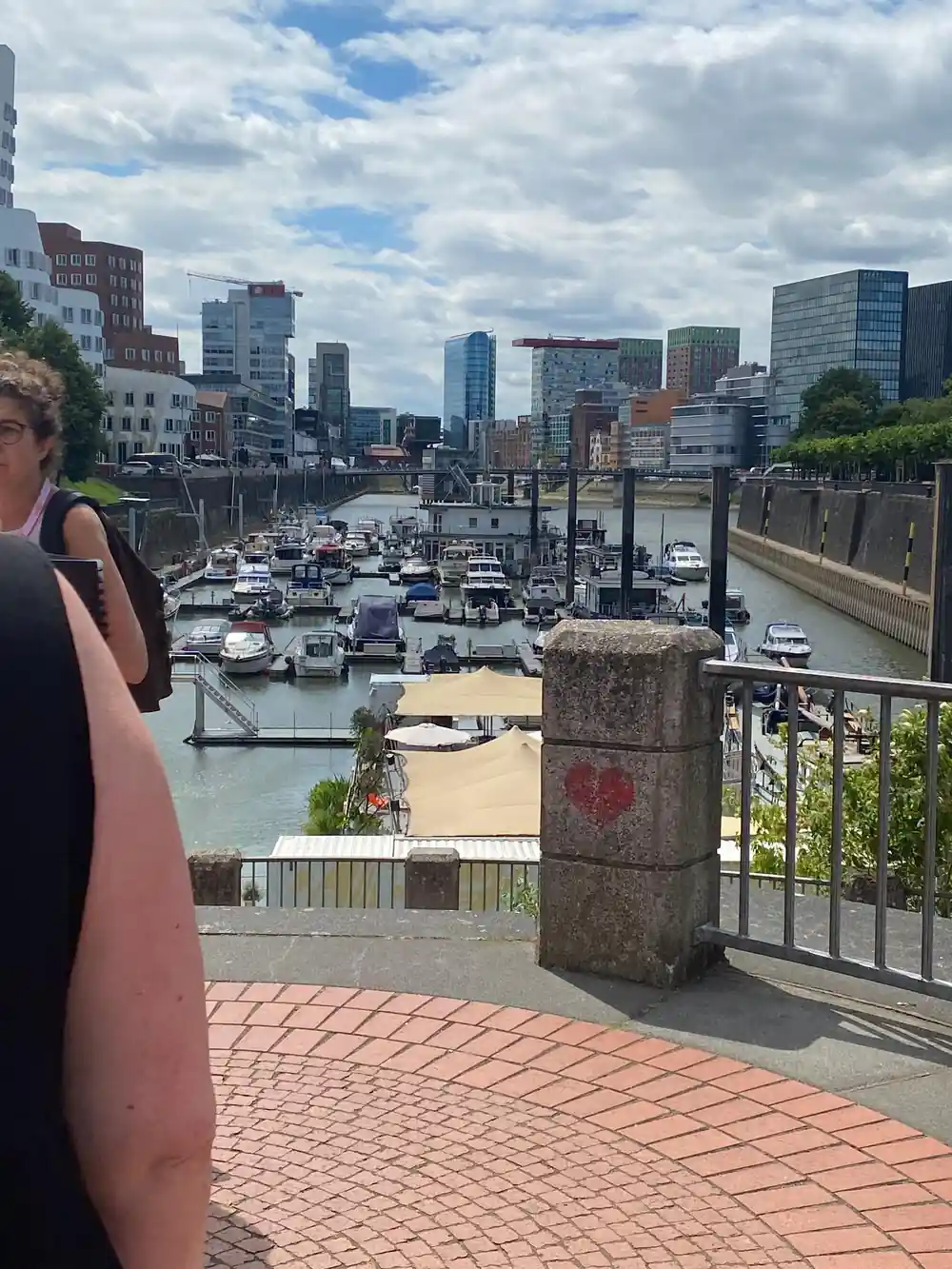
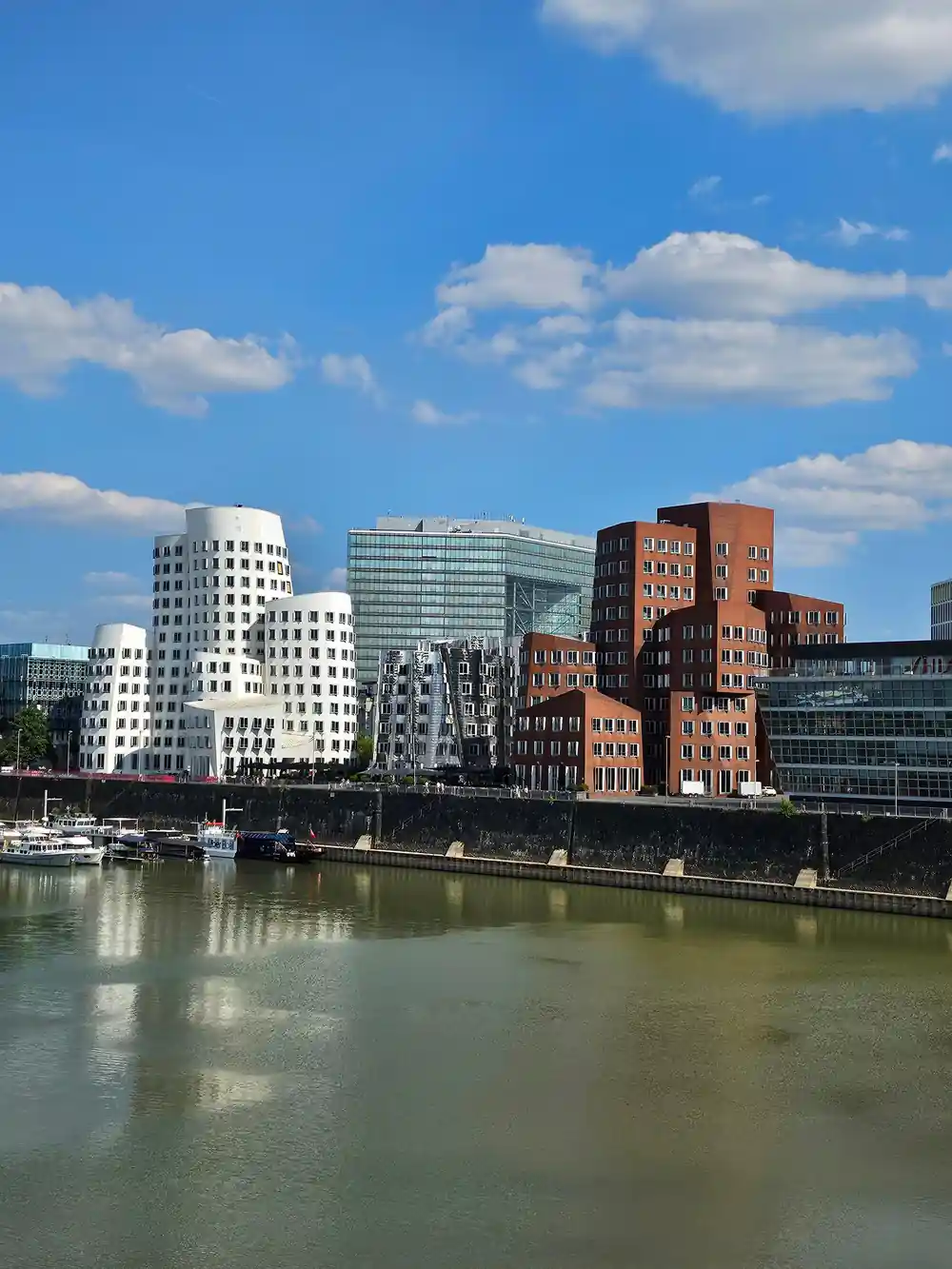
The district moves between two versions of the same waterfront. On one side you have old stone quay walls, moorings and low brick buildings; on the other, glass offices and sculptural facades that rise straight out of the water. Photographers will find plenty to stop for, and the walking stretches are where the guide's stories land best.
Cobbles, Quayside Surfaces, and Ground Conditions
Expect a mix of surfaces underfoot. The newer parts of the MedienHafen sit on wide paved walkways, granite slabs and smooth bridge decks with shallow steps at the terraces. Older lanes nearby still carry cobbles, kerbs and tram rails, and the joins between old and new are where an inattentive foot is most likely to catch. Düsseldorf's Rhine embankment promenade is one and a half kilometres long and follows the river through this part of the city.[5]
Ground conditions are generally good. The harbour quarter is largely flat, and the steps you meet are short flights at bridges, terraces and doorways rather than long staircases. Rain changes things: wet stone, painted markings, metal edges and wooden decking turn slick, and puddles gather at the low points of paving. This is a working river as well as a postcard view, and in 1995 the Rhine crested at 10.69 metres at Düsseldorf.[6]
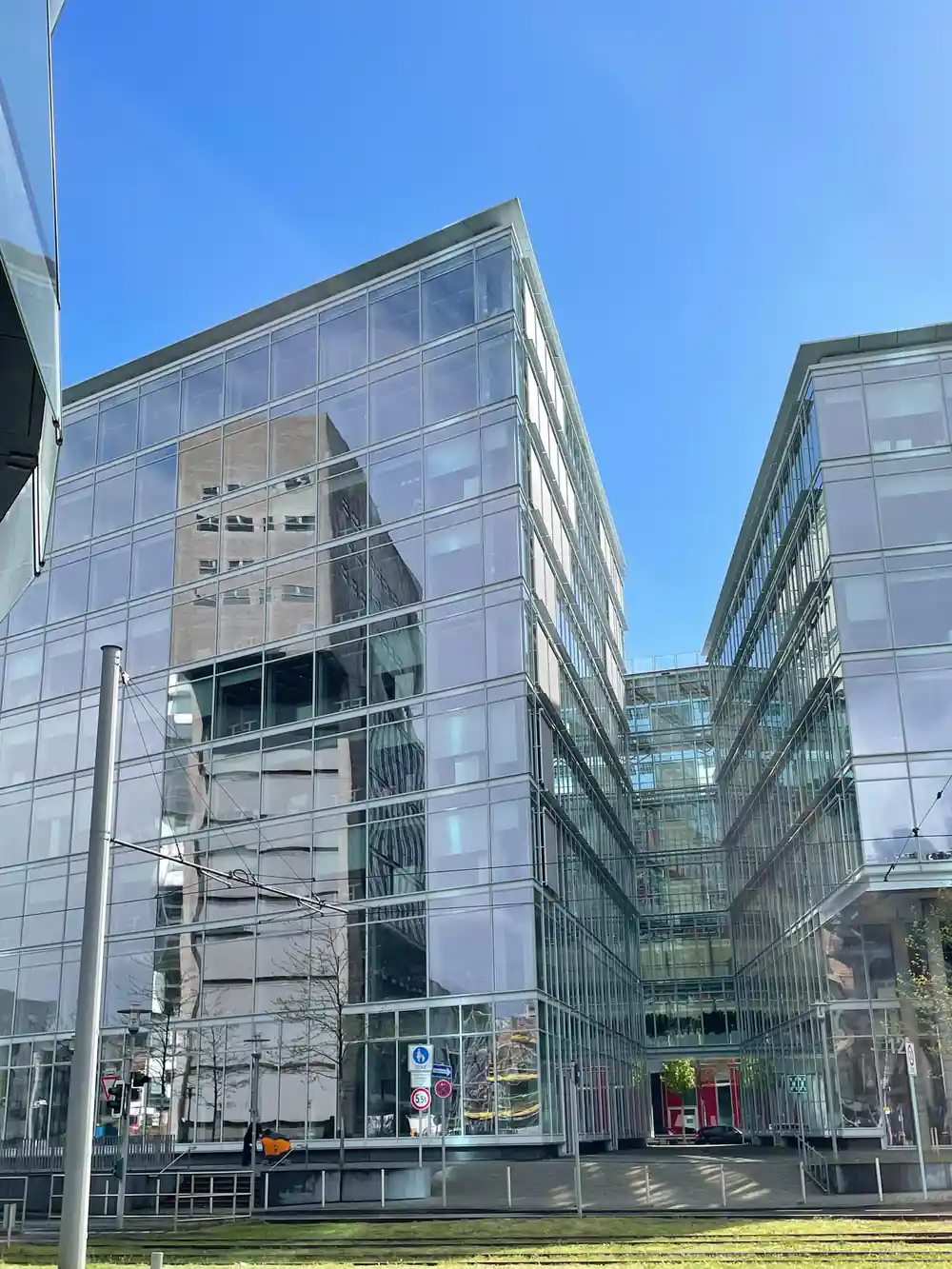
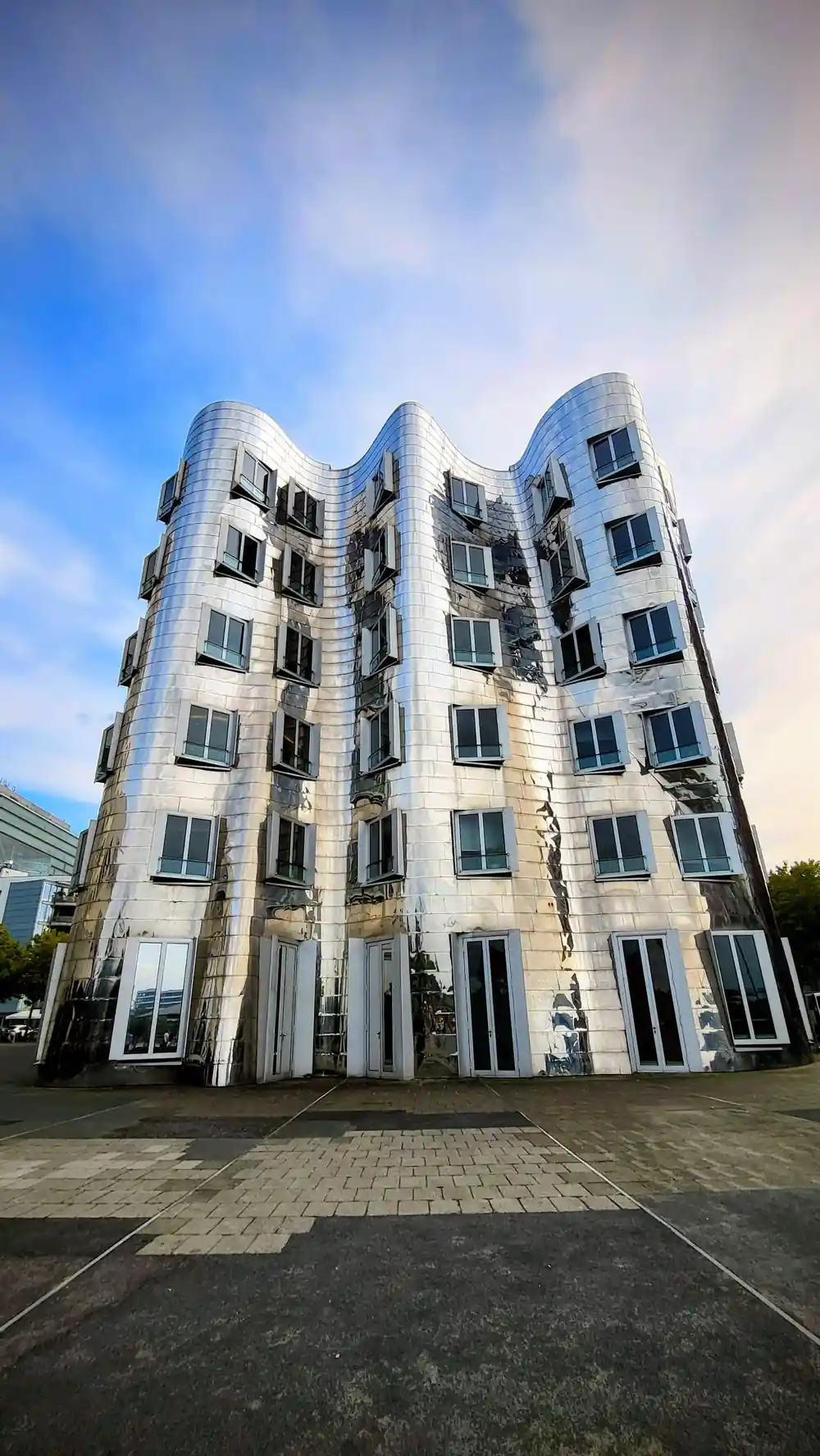
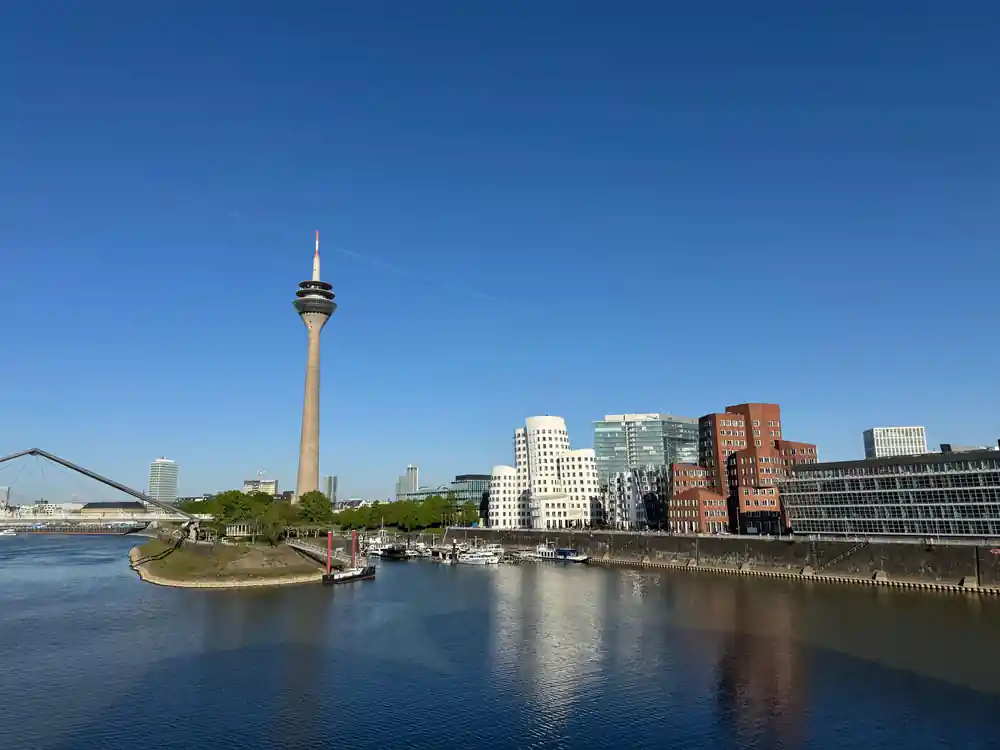
Curved glass, tilting facades and the Rhine beyond: the MedienHafen on foot.
Footwear and Clothing for the Harbour Walk
Flat, closed shoes with a grippy sole are the right call. Trainers work well, and anything with a thick, firm sole handles cobbles better than thin-soled sandals or heels. Ankle support is not essential on ground this level, but the walk runs for two hours and shoes you have already broken in will treat you better than a new pair.[1] Carry a light bag rather than a heavy one.
Clothing is about layers and wind. The harbour is open to the river, so breezes off the water can make a mild day feel cool, while a sheltered courtyard a few steps inland can feel warm. A thin windproof layer, a scarf in the shoulder seasons and a light waterproof jacket cover most conditions. In summer, a hat is worth carrying, and in winter you will want gloves, a warm hat and something that blocks the wind on the quays.
It also helps to think about what you are carrying rather than what you are wearing. A small shoulder bag or a light backpack keeps your hands free for photographs, and a bottle of water is worth having on a warm afternoon. Leave the heavy camera bag at the hotel if you can; the route rewards quick snaps more than a tripod setup.
Toilet Facilities Along the Route
Sort out a toilet stop before the walk begins. The route runs for two hours, so the simplest plan is to use the facilities at your meeting point or a cafe nearby before you set off.[1] The MedienHafen is home to more than 700 companies.[7] Cafes, bars and restaurants sit along the quays and squares, and a polite request at the counter usually works if you need a stop partway round.
Plan around the middle of the walk if you are travelling with children or anyone who needs regular stops. It is easier to slip away at a square or bridge, where the group naturally pauses, than to wait until the very end of the route. If you have booked the private group option, mention at the start that you may want a short break and the guide can shape the walking around it.[1]
Elsewhere in the city, the obvious options are the main station, department stores and the big museums, so it is worth dealing with a stop before you travel to the harbour rather than counting on one along the way.
from US$218
The MedienHafen Tour: two hours with a live guide in German and English, rated 4.64 from 276 reviews.[1]
Weather, Wind, and Conditions on the Water
The Rhine is 1320 km long, and it gives the MedienHafen its whole character.[8] Harbour basins, quay walls and the river channel sit side by side, so the air moves and temperatures near the water can feel lower than they do a few streets inland. Wind is what most people underestimate: it funnels along the quays and between the tall buildings, turning a still afternoon in the shopping streets into a breezy one at the water's edge.
Rain is manageable rather than a reason to stay indoors. The walk is outdoors and on foot, and the buildings around you offer little shelter except at entrances and under bridges, so a compact umbrella or a hooded jacket earns its place. Winter days can be raw and grey with short daylight, while summer evenings are long and mild. Whatever the forecast, free cancellation applies up to 24 hours in advance for a full refund.[1]
Best Season and Time of Day to Tour
Late spring through early autumn is the comfortable window for a walking tour here, with long daylight, outdoor tables and the river at its most sociable. High summer brings the busiest pavements, and this is a city that draws a crowd: Düsseldorf recorded 3,068,803 guest arrivals in 2018.[9] Early mornings and late afternoons tend to be quieter and give better light on glass and metal facades. Winter walks are shorter on daylight but atmospheric, with fewer people on the quays.
Starting times are not fixed to one slot, so check availability to see starting times for the date you want.[1] If you have a choice, aim for the hours before sunset in summer, when the harbour buildings pick up warm light and the Rhine Tower stands out against the sky. In winter, a midday start makes the most of the daylight. Book early for weekends and public holidays, and remember that a private group option is available if you want the guide to yourself.[1]
Midweek slots leave the weekend crowds to somebody else, and a morning departure leaves the rest of the day free for the old town, the Rhine embankment or a boat trip. If you are in the city for only a day, put the MedienHafen walk first and build everything else around it.
Buildings You Enter and Interior Access
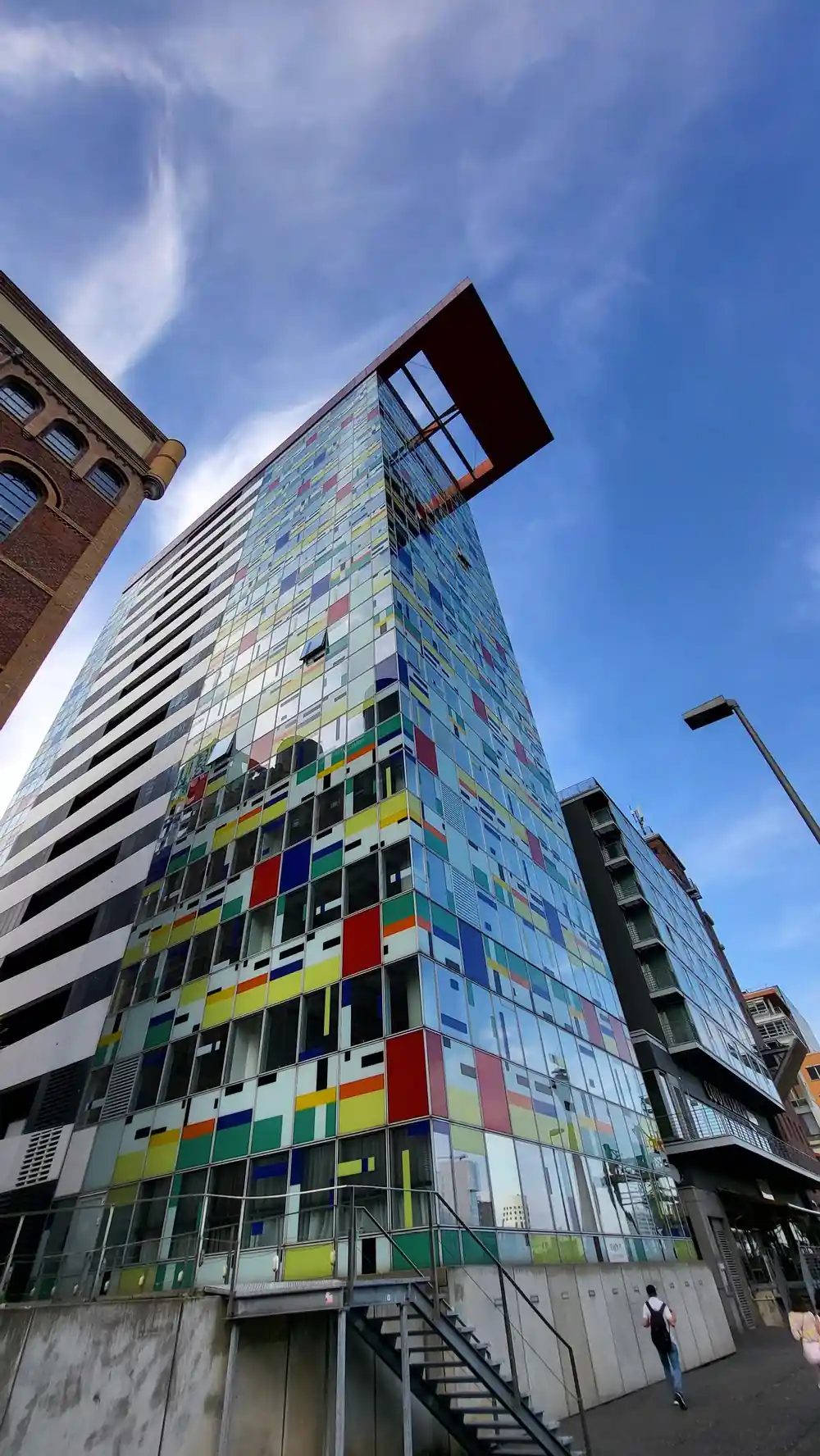
The buildings that define the MedienHafen are best understood from the outside, on foot, which is how a walking tour works. The Neuer Zollhof is a complex of three buildings designed by Frank Gehry and completed in 1999, with tilting, curved facades that seem to change shape as you circle them.[10] The Colorium is a modern building designed by British architect Will Alsop that stands 17 stories tall.[11] Above it all rises the Rheinturm, 240.5 metres tall and built between 1979 and 1982.[12]
Interior access depends on what each building happens to offer on the day. Shops, cafes and hotel lobbies are usually open to anyone who walks in, while the working floors above them are not public. If a particular stop matters to you, say so at the start of the walk, and your guide can point you to whatever is open once the tour ends. The Rheinturm itself carries the Lichtzeitpegel, an architectural installation by Horst H. Baumann that shows the current time using a vertical series of lights in a simplified decimal reading layout.[13]
Because so much of the appeal is exterior, the walk works well as a first look at the district. You can come back later to whichever building, bar or terrace caught your eye, at your own pace, and see it in different light.
Traveller review counts on four Düsseldorf tours
Review counts from the listings: MedienHafen Tour[1], Altstadt Guided Tour[2], Rhine Segway Tour[14], City Architecture Walking Tour[3].
From-prices in US dollars for four Düsseldorf tours
From-prices as listed on GetYourGuide:[1][2][3][14].
When to book the MedienHafen walk
Plan the MedienHafen walk
Book your date
Pick a start time when you book; the listing asks you to check availability to see the times that run on your date.
Check the forecast
Take the weather seriously and pack a thin windproof layer whatever the morning looks like.
Wear broken-in shoes
Flat soles with grip are the practical choice for cobbles, bridge decks and wet paving.
Arrive a little early
Give yourself time to find the meeting point and to use a cafe before the group sets off.
Look up often
The best details are above eye level: tilting facades, coloured glass and the tower on the skyline.
See the MedienHafen with a guide who knows every corner
from US$219Reserve now & pay later