Quick summary
- A vertical column of lights on the Rhine Tower that shows the current time in a simplified decimal layout, designed by Horst H. Baumann.[1]
- The Rheinturm soars 240.5 metres and was built between 1979 and 1982 above the MedienHafen.[2]
- The district at the tower's feet is home to more than 700 companies and to the Neuer Zollhof, Frank Gehry's complex of three buildings.[3][4]
- Rhine Tower entry starts from US$14, and the MedienHafen Tour under the tower starts from US$218.[5][6]
- Go late in the day: the lights read best after dark, and the promenade below the tower is easy, flat walking.
| Rhine Tower ticket | Hop-on hop-off | MedienHafen tour | |
|---|---|---|---|
| From | from US$14[5] | from US$28[7] | from US$218[6] |
| Format | Entry ticket, valid 1 day[5] | Valid 1 day from first activation[7] | Live guide, 2 hours[6] |
| Rating | 4.41 from 226 reviews[5] | 4.23 from 1,771 reviews[7] | 4.64 from 276 reviews[6] |
| Good to know | Skip the ticket line[5] | Audio guide included[7] | Private group available[6] |
| Cancellation | Free up to 24 hours ahead[5] | Free up to 24 hours ahead[7] | Free up to 24 hours ahead[6] |
The Lichtzeitpegel (light time decimal clock) is a famous architectural installation designed by Horst H. Baumann on the Rhine Tower (Rheinturm) in Düsseldorf. It uses a vertical series of lights to display the current time using a simplified decimal reading layout.
Is the Rheinturm worth visiting?
Before reserving
Why the Rheinturm Was Built
The Rhine runs 1320 km from the Alps to the North Sea, and Düsseldorf grew up on its banks as a trading city.[8] At the end of the 19th century the docks lay at the southern end of the Rheinuferpromenade and played a part in the city's boom until the end of WWII.[9] When shipping moved on and the old basin emptied, the city found a new use for the water. In the 1980s and 1990s planners reimagined the vacant harbour as the MedienHafen media district.[10] Today more than 700 companies work behind its facades, and the quayside restaurants fill up as soon as the sun comes out.[3]
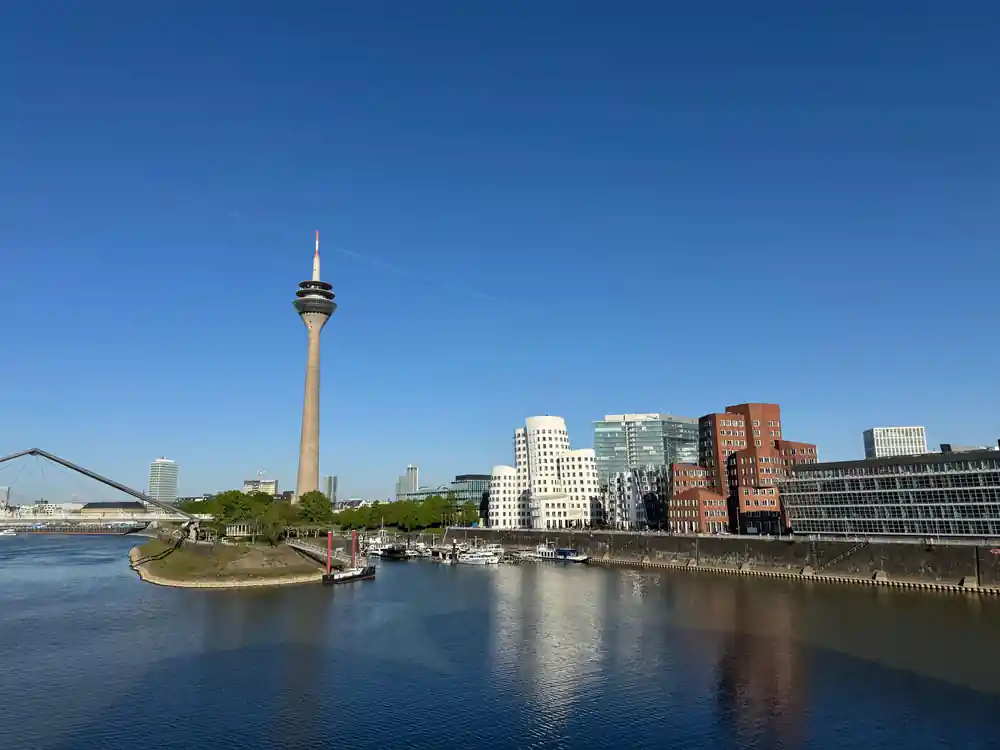
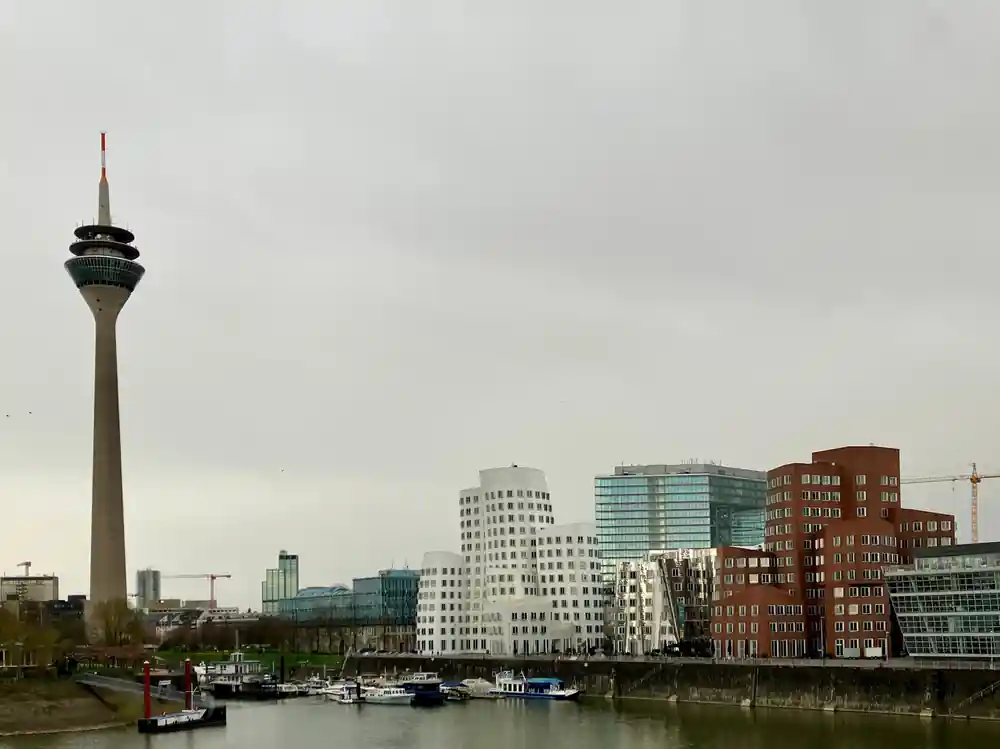
The Rheinturm belongs to that same burst of reinvention. It soars 240.5 metres into the sky and was built between 1979 and 1982, and it stands clear of the surrounding offices so you can pick it out from the far bank.[2] Seen from the river it is a slim concrete shaft with a broader head, and the older warehouse roofs around it make the height obvious. On foot it works as a signpost. Once the tower is in view you have found the MedienHafen, and the quay, the bridges and the eating places are all close at hand.
The Light Clock on the Rheinturm
What makes the tower more than a tall mast is what runs up its side. The Lichtzeitpegel, or light time clock, is an architectural installation by Horst H. Baumann on the Rhine Tower that shows the current time using a vertical series of lights in a simplified decimal reading layout.[1] In daylight the lamps read as part of the concrete and plenty of people walk past without noticing them at all. After dark they turn the shaft into a display, and the tower becomes a clock you can see from far across the river.
It is a generous idea: a public clock that belongs to the city rather than to an office block. Anyone strolling the promenade can check the Düsseldorf local time by glancing up, and a visitor just off the train can read the Düsseldorf Germany time now without pulling a phone from a pocket. Look at how the installation is built and the arrangement becomes clear. The lights stand in a single vertical line, grouped so that they read as digits rather than as hands, which is what a decimal layout means in practice.
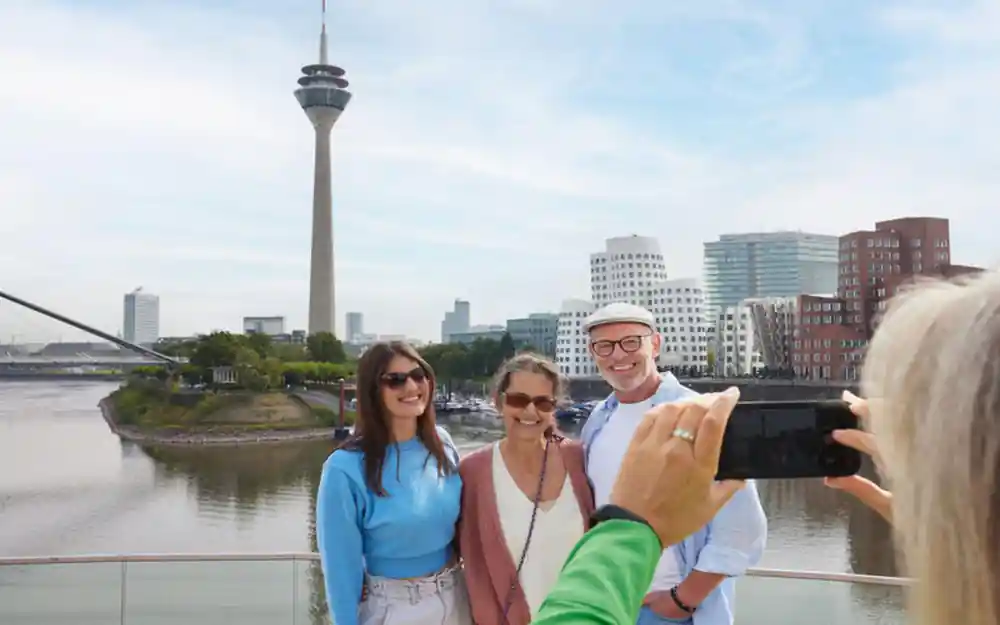
The Rheinturm above the MedienHafen, where the harbour meets the Rhine.
Reading the Lights as a Clock
The trick to reading it is to stop looking for hands. Each group of lights stands for a digit, and the column is read downwards the way you would read a page, with the digits building the time from top to bottom. It takes a moment at first and then it becomes automatic. Stand on the promenade with the tower in front of you, or look across from the far bank, and the answer arrives about as fast as a glance at a wristwatch.
The clock is easiest to use after dark, when the lamps carry against the sky and there is no low sun to compete with them. Winter evenings are especially good, with the lights reflected in the water and the harbour windows glowing behind them. Stand back far enough to take in the whole column, and the digits settle into place as your eye runs down the sequence. Even the movement at the end of the column is quick enough to confirm that you have read the pattern correctly, and the effect is oddly calming on a quiet riverside evening.
The View from the Top
Rhine Tower entry tickets start from US$14, are valid for one day and skip the ticket line at the entrance, which makes it easy to wait for a clear spell before going up.[5] The ticket is wheelchair accessible as well.[5] The building soars 240.5 metres into the sky, so the lift carries you well above the harbour roofs.[2] Buy for a day rather than a fixed hour and you can fit the climb around a walk along the quay, a meal, or a change in the weather.
From the top the city spreads out in layers. The MedienHafen sits directly below, a grid of glass offices and converted warehouses with the water threaded between them. The Rhine embankment promenade runs one and a half kilometers along the bank, and from above you can follow it from the old town past the tower and on towards the bridges.[11] Further out, the market square and the long curve of the river make a map of everything you might walk the next day. Take the view in slowly rather than rushing back to the lift.
240.5 m
The Rheinturm rises 240.5 metres over the harbour, and its light clock can be read from the quay below.[2]
The Harbour at the Tower's Feet
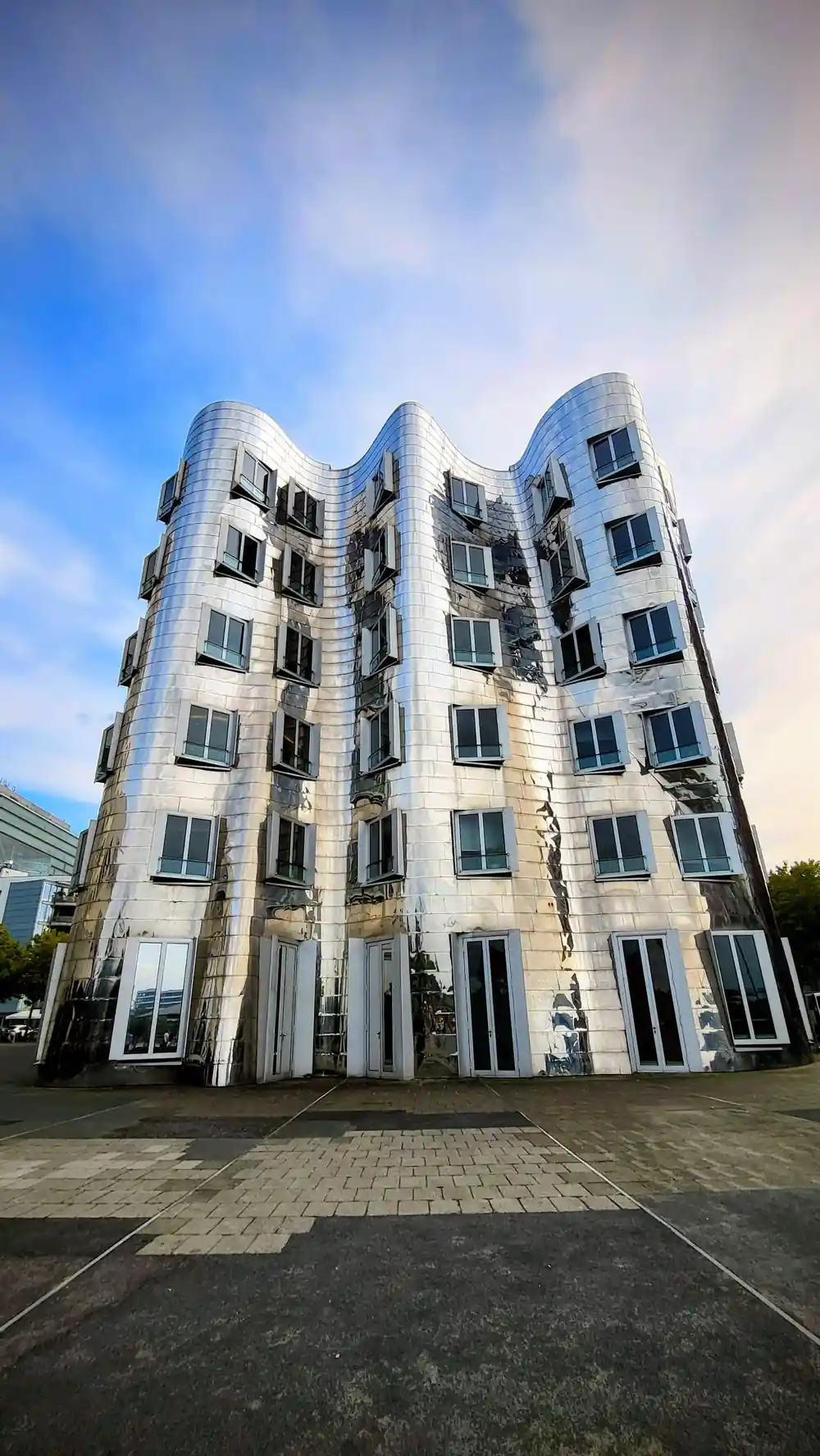
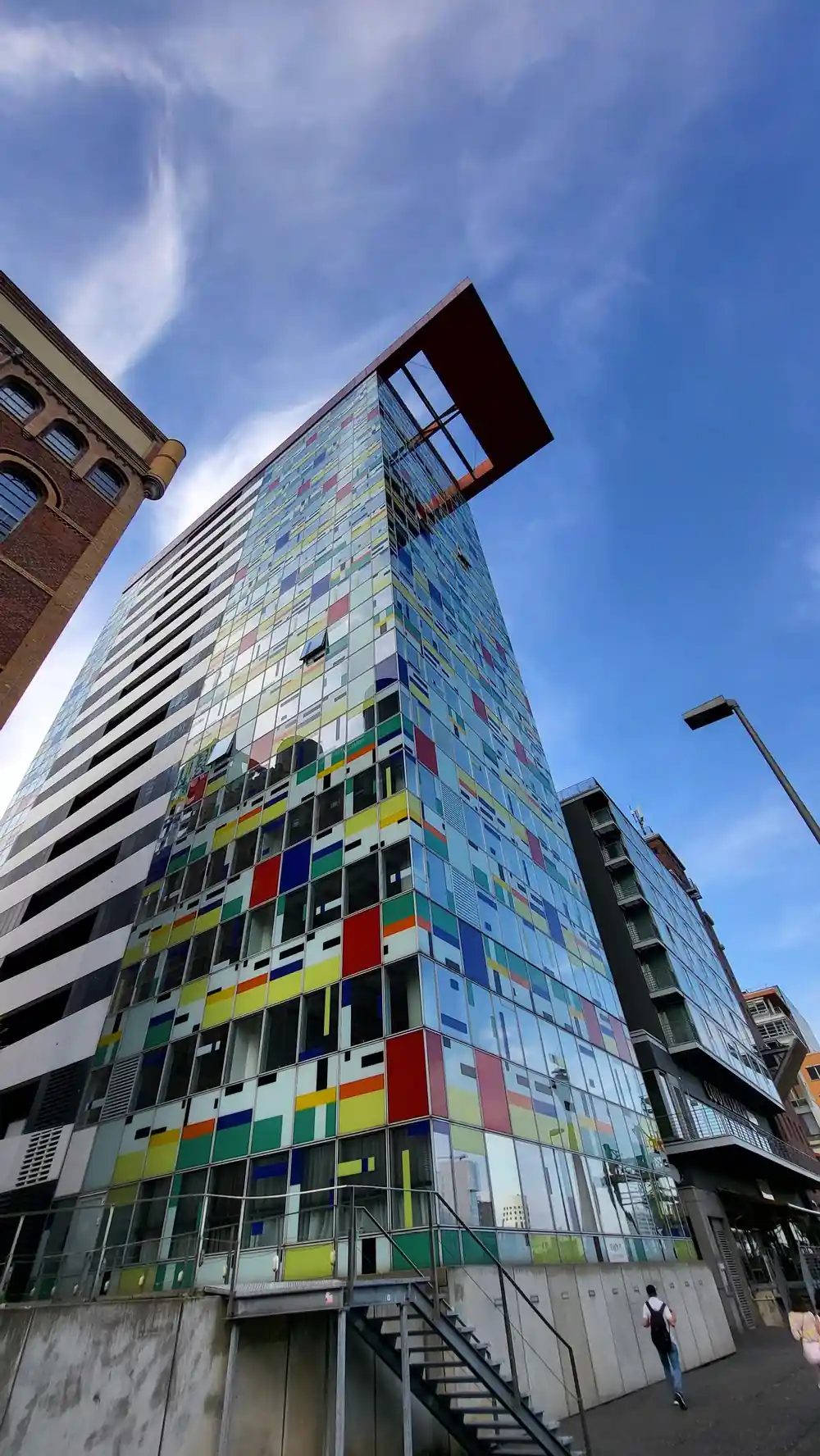
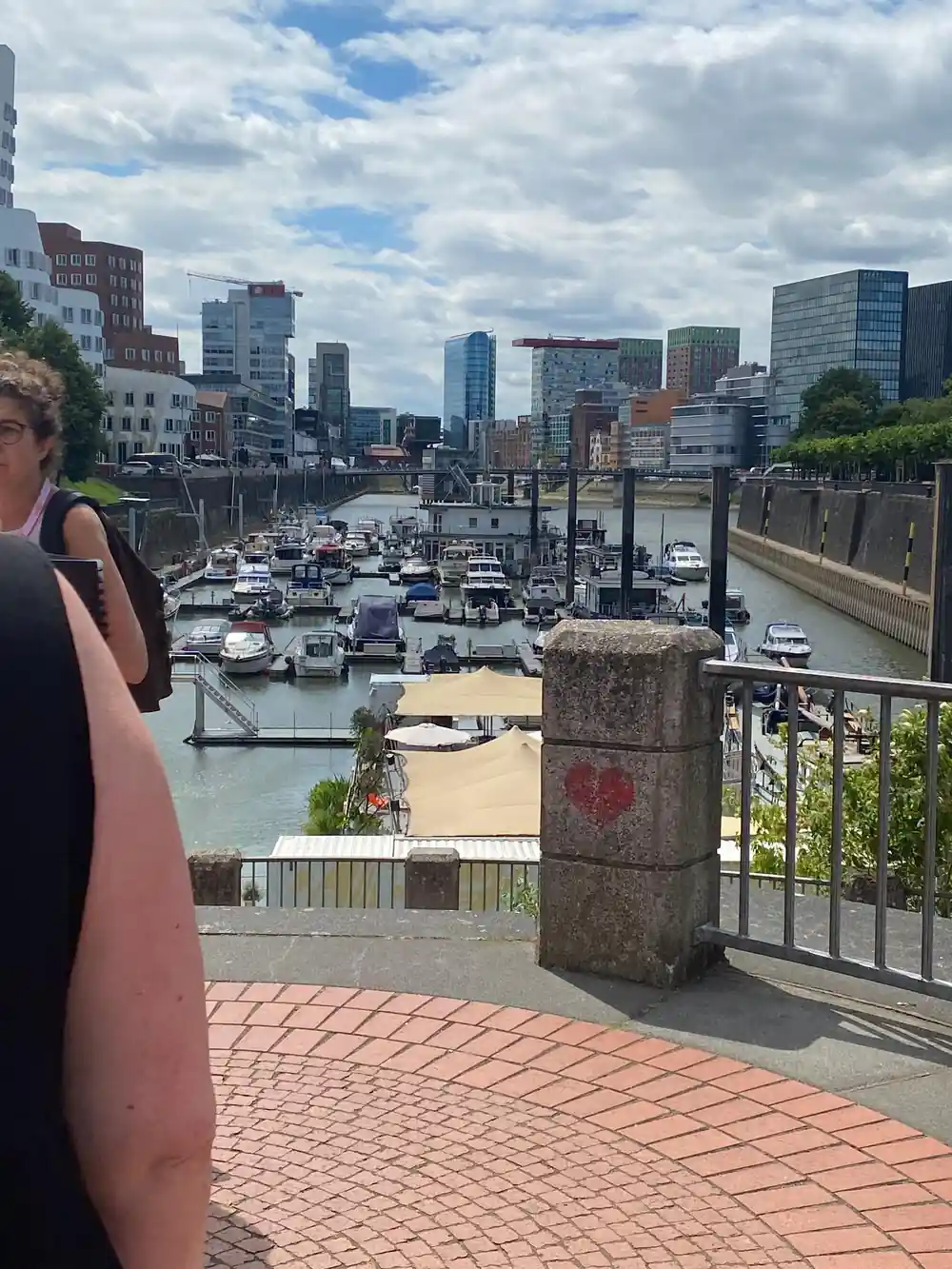
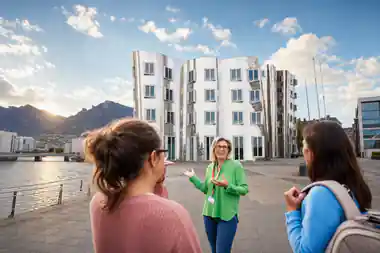
The district under the tower is a working quarter as much as a sightseeing one, with more than 700 companies behind the facades.[3] Look for the Neuer Zollhof, the Frank Gehry complex of three buildings completed in 1999.[4] The three wear different skins, in white plaster, red brick and stainless steel, and their walls lean and curve against each other in a way that still looks new. Close by, the Colorium stands 17 stories tall, designed by the British architect Will Alsop and faced with printed glass panels that shift colour as you walk past.[12] Walking between them is the best way to see how far the harbour has travelled from its dockyard days.
Water is never far from the story here either. In 1995 the Rhine crested at 10.69 metres at Düsseldorf, testing the harbour's flood defences.[13] The high quay walls and the raised promenade make more sense once you know how far the river can climb, and the same waterfront now carries restaurants, moorings and a steady evening crowd. It is worth standing at the water's edge and looking from the river back to the tower, because that single view ties the old port and the new district together in one frame.
Getting There and Around the Harbour
The tower stands at the western edge of the MedienHafen, within easy reach of the old town along the river. The 24-hour hop-on hop-off ticket starts from US$28, is valid for one day from first activation, includes an audio guide and counts the Rheinturm among its stops.[7] It is a simple way to link the tower with the old town, the Königsallee and the riverside in a single day, and you can step off wherever the view appeals.
For a different pace, the Segway tour along the Rhine runs for 2 hours and starts from US$91.[14] On foot, the MedienHafen Tour lasts 2 hours with a live guide in German or English, and a private group option is available.[6] Whichever you choose, booking a set time is worth it in high season. Düsseldorf recorded 3,068,803 guest arrivals in 2018.[15] Popular slots go quickly once the weather settles.
When to Go and What to Wear
The tower is a year round sight, but the light clock belongs to the darker half of the day. Come in the late afternoon to see the city in daylight from the top, then stay for the lamps to come on over the harbour. Evenings along the Rhine are cool even in high summer, since the wind runs up the river channel, so a light jacket is worth carrying. Comfortable shoes matter more than anything else, because the harbour is best seen on foot and the promenade is where most of the walking happens. If your time is short, the tower and the quay in front of it are enough.
Booking is straightforward. The Rhine Tower entry ticket is valid for one day, so a change of plan costs nothing as long as you use it inside that window.[5] The MedienHafen Tour can be reserved now and paid later, and free cancellation up to 24 hours in advance gives you a full refund.[6] The same terms apply to the tower ticket.[5] Put the two together and you have a day that works in almost any weather: the view when the sky is clear, the harbour walk when it is not.
Traveller ratings for Düsseldorf tours
Scores stated by the GetYourGuide listings[6][14][16][17][18].
From-prices for a tower and harbour day
From-prices per person in US dollars, taken from the GetYourGuide listings[5][6][7][14].
When to plan your visit
Planning a Rheinturm visit
Book the tower ticket
Rhine Tower entry starts from US$14 and is valid for one day, so you can pick the hour that suits the weather.[5]
Read the light clock
Look up at the vertical series of lights after dark, when the decimal layout shows the current time.[1]
Walk the MedienHafen
The district holds more than 700 companies, with the Neuer Zollhof, Frank Gehry's complex of three buildings, at its heart.[3][4]
Join a guided walk
The MedienHafen Tour runs for 2 hours with a live guide in German or English.[6]
Follow the promenade
The Rhine embankment promenade runs one and a half kilometers beside the water, a flat route past the tower.[11]
Walk the harbour beneath the light clock
from US$219Reserve now & pay later